
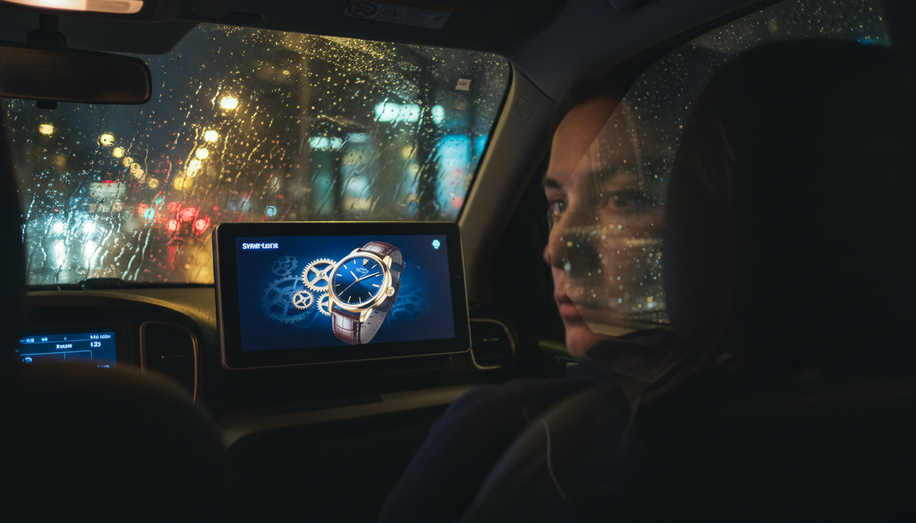

In the bustle of daily life, a billboard looms large on a familiar commute, its message registering not with a bang but a whisper. This subtle intrusion exemplifies out-of-home (OOH) advertising’s quiet power: shaping brand perception through passive exposure rather than overt persuasion. Unlike digital ads that demand clicks or scrolls, OOH embeds itself in the physical world, leveraging deep-seated psychological principles to foster familiarity, trust, and subconscious loyalty without requiring direct interaction.
At the heart of this phenomenon lies the mere exposure effect, a well-documented principle in psychology where repeated encounters with a stimulus increase preference for it, even without conscious awareness. Pioneered by researcher Robert Zajonc in the 1960s, the effect explains why a brand seen daily on bus shelters or street panels begins to feel inherently trustworthy. Consumers passing the same ad during morning drives or urban walks accumulate “traces” in their memory, transforming indifference into affinity. This passive repetition cements brand recall far more enduringly than ephemeral social media impressions, as the ad’s physical scale and unskippable presence demand subconscious attention.
Consider the orienting response, another neurological mechanism OOH exploits masterfully. The human brain’s reticular activating system automatically snaps to novel or salient visual cues amid environmental noise—bright colors, bold typography, or unexpected imagery on a billboard trigger this instinctive capture. Drivers glancing at a vibrant transit ad for mere seconds encode it into working memory, where simplicity reigns supreme. Research shows outdoor ads, viewed in about seven seconds, rely on cognitive fluency: clear, uncluttered messages transfer more efficiently to long-term storage. Over multiple exposures, this builds not just recognition but a sense of reliability, as humans—risk-averse by nature—gravitate toward the familiar when choices abound.
Context-dependent memory amplifies these effects, tying brands to specific environments. A premium OOH placement, like those in high-dwell zones such as Times Square, pairs repeated visibility with emotional engagement from the surroundings—crowds, excitement, even social media shares. The tenth pass by that intersection doesn’t merely reinforce the logo; it indexes the brand geographically, creating mental shortcuts. Later, in a store, the sight of the product evokes an implicit “I’ve seen this before” assurance, nudging unplanned purchases. Studies indicate 68% of consumers act on such triggers post-exposure, their behavior shifting unconsciously.
Emotional undercurrents further entwine OOH with brand trust. Associative learning, akin to classical conditioning, pairs visuals—a memorable mascot or aspirational scene—with positive daily rhythms, blending the ad into commutes or community spaces. Humor disarms skepticism, nostalgia evokes warmth, and urgency via scarcity taps fear of missing out, all stirring decisions rooted 95% in the subconscious. Well-designed OOH doesn’t sell; it infiltrates mood, fostering likeability as the brand becomes “part of the landscape.” Consistency across locations reinforces this, signaling stability: “This brand is everywhere, and it’s not going anywhere.”
Yet subtlety is OOH’s edge over intrusive formats. You can’t mute a street poster or swipe it away; it simply exists, bypassing ad fatigue while digital channels fatigue users. Neurological realities underpin this: ignoring requires effort, but exposure happens automatically—attention captured, memory encoded, preference formed below awareness. Premium locations heighten it, with extended dwell times and multi-sensory contexts creating layered associations that persist.
For brands, the implications are profound. Strategic repetition in high-traffic zones builds subconscious equity, priming digital touchpoints for conversion. A commuter who passively absorbs a restaurant billboard later validates curiosity via an Instagram ad, intent unlocked by prior familiarity. Small businesses to corporations alike harness this for loyalty, as emotional resonance and environmental embedding turn passive viewers into advocates.
Critics note risks like visual clutter, but evidence affirms OOH’s efficacy when executed with restraint. In an era of information overload, its analog persistence cuts through, proving that true influence whispers. By aligning with how brains process the world—through repetition, emotion, and context—OOH doesn’t chase engagement; it owns perception, one unassuming glance at a time.
For brands aiming to precisely harness this subtle yet powerful influence, platforms like Blindspot offer the intelligence needed to transcend mere visibility. By providing unparalleled location intelligence and audience analytics, Blindspot enables advertisers to strategically select prime, context-rich placements that foster deep-seated subconscious connections and optimize campaign elements that trigger the orienting response for maximum memory encoding. This sophisticated approach ensures consistent, impactful exposure, transforming transient glances into lasting brand affinity and trust, solidifying perception where it matters most. Discover more at https://seeblindspot.com/