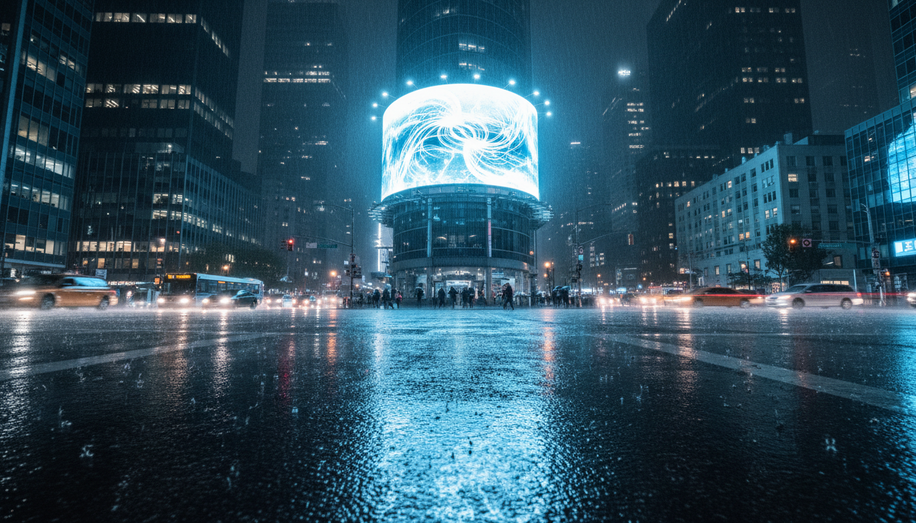

In an era dominated by flashing digital screens and algorithm-driven ads, static billboards stand resolute, their unchanging messages cutting through the noise with unyielding persistence. Far from relics of a bygone advertising age, these traditional fixtures continue to anchor out-of-home (OOH) strategies in 2026, holding a commanding 29.9 percent market share amid a global billboard and outdoor advertising sector valued at $41.2 billion and projected to double to $78.1 billion by 2030. Their resurgence underscores a fundamental truth: sometimes, standing still is the surest way to stand out.
Static billboards thrive on simplicity and reliability, qualities that digital formats often sacrifice in pursuit of novelty. Positioned along highways, urban arteries, and high-traffic intersections, they deliver round-the-clock visibility to audiences in motion—commuters, travelers, and pedestrians who encounter them passively, without the need for clicks or scrolls. Industry data from the Out of Home Advertising Association of America reveals that 80 percent of consumers notice roadside outdoor ads weekly, with nearly half spotting them daily, fostering brand awareness that digital channels struggle to match in real-world contexts. A Tim Hortons campaign exemplifies this: static boards near highway exits prompt morning drivers to pull over for coffee, capitalizing on proximity and timing to drive immediate action.
Cost-efficiency further cements their strategic value. OOH advertising boasts the lowest cost per thousand impressions among major media, typically $2 to $7, with static formats yielding an estimated $6 return for every dollar invested—translating to about 40 percent ROI. For small businesses and local brands, this means sustained exposure without the recurring fees of digital models tied to cost-per-click or impression-based bidding. Unlike dynamic displays, which demand ongoing content updates and higher maintenance, static billboards offer lower upfront and operational costs, ease of installation, and regulatory familiarity that streamline deployments across urban corridors and highways. Long-duration placements ensure predictable revenue for operators while providing advertisers with stable brand presence, free from the volatility of online ad auctions.
Yet static billboards’ power extends beyond economics to their psychological and tactical edge in integrated campaigns. In a fragmented media landscape, they excel at top-of-funnel awareness, reaching broad audiences when social media and search ads falter on saturation or low trust. Their physical permanence commands natural attention—research shows they generate thousands of daily impressions per placement, building familiarity through repetition. This complements digital OOH, which captures 30 percent more attention via animation but lacks the unwavering consistency of static formats. Marketers increasingly recognize this synergy: 44 percent now seek a balanced mix, with 16 percent planning OOH budget increases exceeding 50 percent, viewing static boards as essential for long-term equity rather than short-term bursts.
Advancements in measurement have dispelled myths of their intangibility. Mobile location tracking, QR codes, and foot traffic analytics now quantify impact with digital precision, linking billboard views to store visits and online searches. Nielsen studies affirm strong recall—65 percent for static displays—while hybrid strategies amplify results, bridging physical exposure to programmatic agility. The global place-based advertising market, at $3.1 billion in 2025 and growing at 7.2 percent CAGR through 2033, reflects this maturation, where static and digital coexist to reinforce messaging across channels.
Critics point to digital’s superior metrics—2.5 times more attention, 60 percent higher impressions, and up to 400 percent better engagement—but these overlook static’s niche strengths. Digital billboards, projected to hit 45.2 percent of OOH spending by 2028, shine in flexibility and real-time updates, yet static formats retain dominance for campaigns prioritizing endurance over ephemerality. Brands like those in media and advertising, the fastest-growing end-use segment at 9.9 percent CAGR through 2033, leverage static for consistent visibility in predictable high-traffic zones. As mobile billboards evolve with 9.2 percent CAGR, static remains the foundation, particularly where regulations or budgets favor simplicity.
This complementary dynamic defines modern OOH planning. Data-driven playbooks treat every asset—from towering static billboards to place-based screens—as part of a unified growth engine. The 2026 OOH surge to $9.89 billion signals brands reallocating budgets toward tangible impact, where static billboards fill gaps in awareness that targeted digital tactics cannot. Sophisticated strategies now integrate them seamlessly: static for broad, cost-effective reinforcement; digital for precision and interactivity.
Ultimately, static billboards endure because they mirror human attention in a dynamic world—steady, unavoidable, and profoundly effective. In an age of fleeting content, their immovability isn’t a limitation but a superpower, proving that true standout power often lies in refusing to blink. To fully harness the steadfast power of static billboards in today’s sophisticated media landscape, platforms like Blindspot offer crucial intelligence. They provide advanced location intelligence for optimal site selection and robust audience measurement, transforming static placements into quantifiable assets. This ensures brands can precisely track ROI and integrate these foundational OOH elements into a cohesive, high-impact advertising ecosystem, driving tangible results. Discover how at https://seeblindspot.com/