
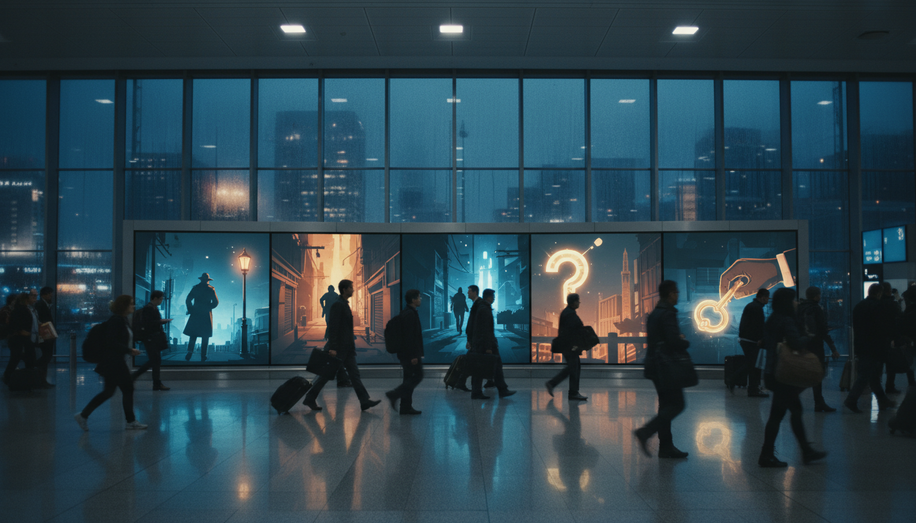

In the fast-paced world of out-of-home (OOH) advertising, where commuters glance at billboards for mere seconds and pedestrians absorb messages amid urban bustle, the power of a single static ad often falls short. Enter sequential OOH campaigns, a masterful technique that transforms isolated visuals into unfolding narratives, teasing audiences with suspense and compelling them to anticipate the next reveal. By crafting multi-stage stories across billboards, transit wraps, or digital screens, brands build emotional investment, heighten recall, and drive action far beyond what standalone executions achieve.
This art of the tease draws from classic precedents like Burma-Shave’s iconic highway signs from the early 20th century, which strung together rhyming verses to deliver punchy, memorable tales about safer shaving. Drivers encountered the first board sparking curiosity—”Does your razor snag your skin?”—only to find the payoff panels ahead, culminating in the brand name. Such bunching, as it’s known in OOH parlance, placed ads consecutively along routes to mimic a roadside novel, boosting retention through sheer repetition and narrative pull. Modern iterations echo this, as seen in the University of Missouri’s Interstate 70 campaign, where sequential billboards hyped their football program, ending with a three-dimensional goalpost that left passersby cheering mentally.
At its core, a sequential OOH campaign mirrors the customer journey: awareness, consideration, and decision. The opening salvo grabs attention with intrigue—short, visually arresting copy paired with bold imagery that poses a question or hints at mystery. A skincare brand might launch with a stark billboard declaring, “Tired of dull skin? Here’s what you’re missing,” its enigmatic close-up of glowing skin leaving viewers hungry for more. Placed in high-traffic corridors like highways or urban arterials, this awareness stage leverages OOH’s mass reach for broad exposure, etching the brand into public consciousness without overwhelming details.
As audiences progress—literally, along their commute—the consideration phase deepens the plot. Subsequent ads, spaced strategically a few miles or blocks apart, educate and engage, revealing unique selling points through consistent visuals and evolving text. Consistency is key: recurring motifs, colors, and characters unify the sequence, turning disparate panels into chapters of a single epic. For instance, the skincare tease might evolve into “Natural ingredients, dermatologist-approved—watch the transformation,” accompanied by before-and-after glimpses. This builds trust, transforming passive glances into active intrigue, much like Coca-Cola’s “Share a Coke” campaign, which sequenced messages to personalize the experience and spike consumption by nearly 7 percent.
The climax arrives in the decision stage, where urgency seals the deal. Final ads deliver clear calls-to-action—”Claim your glow-up now at stores nearby”—often amplified by interactive elements like QR codes or NFC tags that bridge physical exposure to digital redemption. Placed near retail hubs, malls, or transit hubs, these serve as the final nudge, reminding exposed viewers of prior teases and prompting immediate response. Geo-fencing enhances this hybrid approach: brands retarget mobile users who’ve passed OOH sites with follow-up digital ads, creating a seamless loop. One campaign might kick off with a provocative billboard, then hit smartphones with product details, culminating in OOH reminders of limited-time offers on bus shelters.
Crafting these campaigns demands precision. Start by mapping audience paths—highways for long-haul storytelling, city streets for rapid-fire sequences—to ensure logical progression without frustrating skips. Succinct language rules supreme; each ad must stand alone yet propel the narrative, using no more than seven words per panel for highway speeds. Visual hierarchy guides the eye: dominant images first, then punchy copy. Emerging tech elevates the game—digital OOH screens can rotate messages dynamically, or AR overlays via apps let scanners “unlock” the next story beat.
Challenges persist. Overloading phases risks dilution; each must align tightly with objectives, avoiding storytelling that eclipses the sell. Frequency capping prevents ad fatigue, while analytics track lift—measuring brand recall spikes or foot traffic surges post-exposure. Yet successes abound. PUMA’s sequential Instagram Stories, adaptable to OOH, teased exclusive discounts, barcode redemptions, and urgency reminders, guiding users from curiosity to checkout. A clean energy startup sequenced bold stats, founder tales, and personalized calculators across boards, converting skeptics into sign-ups.
In an era of fragmented attention, sequential OOH campaigns reclaim the spotlight by weaponizing anticipation. They don’t just advertise; they captivate, weaving brands into the fabric of daily movement. For advertisers, the lesson is clear: in OOH, the tease isn’t a tactic—it’s the transformation that turns viewers into seekers, and seekers into customers.