
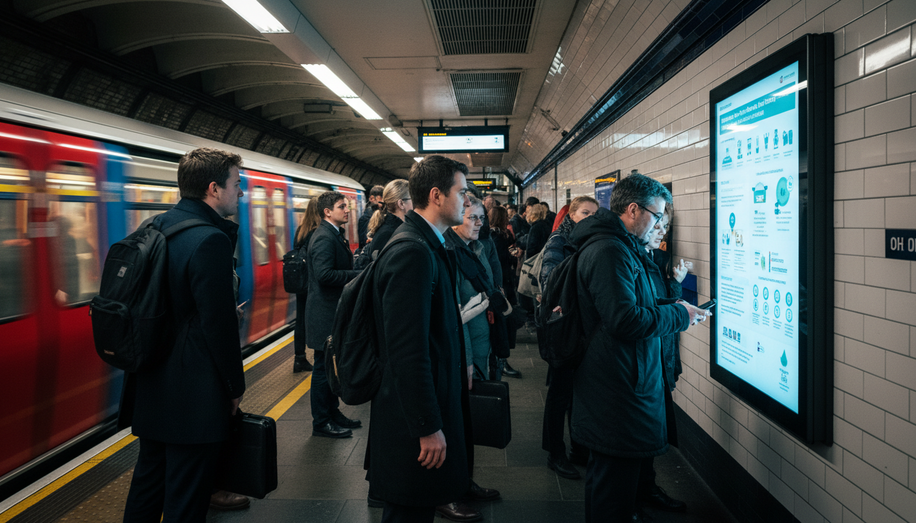

In the confined world of buses, trains, and transit stations, out-of-home (OOH) advertising confronts a unique opportunity: captive audiences with nowhere to hide. Unlike the split-second glance at a roadside billboard, these environments deliver dwell times ranging from five to 15 minutes at stations and 15 to 45 minutes inside vehicles, turning idle commuters into prolonged viewers primed for deeper engagement. This extended exposure—fueled by waits for delayed trains, long bus rides averaging 42.9 minutes in major cities, or platform loitering—allows advertisers to transcend simple brand recall and weave intricate narratives that stick.
The key lies in matching creative design to the rhythm of transit life. In high-speed highway scenarios, ads must boil down to bold visuals and punchy headlines graspable in three to five seconds, but transit demands the opposite: layered storytelling that unfolds over multiple glances. Subway platforms and bus shelters, with their intermediate waits influenced by passenger volume and payment delays, suit sequences of images or video loops that reveal a product’s benefits step by step—a coffee chain, for instance, might cycle from steaming morning mugs to iced afternoon refreshers, lifting foot traffic by up to 15 percent through contextual dayparting. Inside trains and buses, where riders face repeated views during 15-to-45-minute journeys, interior cards, wraps, or digital screens enable multi-phase messaging, reinforcing recall as the same ad loops for seated commuters.
Dynamic digital out-of-home (DOOH) elevates this further, leveraging sensors, WiFi trackers, and real-time data to adapt content on the fly. Ads can shift based on weather, traffic jams, time of day, or even service disruptions, delivering hyper-relevant triggers that boost engagement two to four times over static formats. A fast-food campaign might activate promotions during rain-slicked delays, yielding sales lifts of up to 49 percent, while retail spots near transit routes prompt five to 15 percent increases in store visits by syncing with commuter paths. This adaptability combats viewer fatigue; studies show 18-to-27 percent higher interaction when creatives rotate seasonally or contextually, preventing the burnout from endless repetition in enclosed spaces.
Interactivity transforms passive stares into active pauses. QR codes on station walls or bus interiors invite scans for augmented reality experiences or exclusive offers, encouraging riders to linger mid-stride or during halts, effectively multiplying impressions. In “domination” campaigns that claim entire stations—walls, floors, even branded trains—touchpoints like gamified challenges or audio cues draw eyes longer, as commuters with few distractions absorb content unhindered by phone scrolling. Physical extensions, akin to door hangers in pedestrian zones, prompt deliberate engagement; a rider might pocket a scannable tag for later, extending the ad’s life beyond the platform.
Audience alignment sharpens every tactic. Transit demographics—urban professionals, diverse riders juggling commutes—demand relatable visuals: local faces, aspirational commuters mirroring the viewer, or context-specific appeals like fitness tips above gym-adjacent stops. Geo-targeting high-dwell spots, informed by traffic patterns and behavioral data, places detailed product demos in retail queues or narrative tales during peak-hour crushes, ensuring messages resonate in those unavoidable pauses. Calculating dwell time via visibility distances, approach speeds, or behavioral variables guides placements: opt for larger screens in premium zones to justify spends, as average dwell multiplied by daily impressions yields total exposure time and ROI projections.
Cost-effectiveness underscores the strategy’s appeal. Transit shelters boast the lowest median cost per thousand impressions at $2.18, blending massive reach with repeated frequency along fixed routes. Brands wrapping vehicles or dominating terminals achieve consistent touchpoints, turning delays into assets—New York or London commutes often exceed global averages, creating multiple opportunities per trip.
The results speak volumes. Campaigns harnessing dwell insights report superior conversions, from weather-tied relevance driving traffic to interactive depth fostering loyalty in digital noise. By prioritizing location-savvy design, real-time dynamism, and interactive layers, transit OOH doesn’t merely capture glances—it commands attention, converting transit tedium into brand affinity. In these moving billboards of urban life, the luxury of time becomes the ultimate creative canvas.
Blindspot empowers advertisers to precisely execute this sophisticated vision, transforming transit tedium into tangible brand affinity. Leveraging advanced location intelligence and audience analytics, campaigns can pinpoint optimal high-dwell sites and tailor messages for specific transit demographics, while programmatic DOOH management enables real-time, context-sensitive ad deployment. This ensures every extended moment of engagement is maximized, with clear ROI measurement and attribution demonstrating the true impact of these moving billboards to deliver superior conversions. For more insights, visit https://seeblindspot.com/