
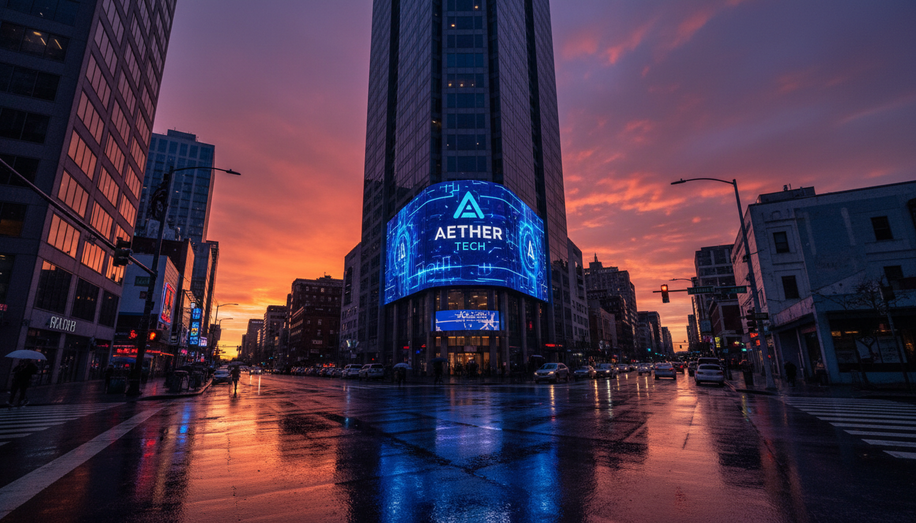

In the bustling corridors of city streets, where towering billboards and digital screens vie for fleeting glances, out-of-home (OOH) advertising has long relied on bold visuals to cut through the urban clamor. Yet, as advertisers seek deeper connections with audiences, a subtle revolution is underway: sonic branding, harnessed not through speakers embedded in the ads themselves, but via the contextual soundscapes of the urban landscape. This approach layers brand-specific auditory cues into the ambient noise of daily life—think tailored park soundscapes or street-level audio prompts—amplifying the emotional punch of static visuals without altering the OOH medium.
Sonic branding, the audio counterpart to a visual logo, crafts distinct sounds that embody a brand’s identity, adaptable across contexts from apps to experiential spaces. In OOH campaigns, it thrives on integration rather than intrusion. Imagine a sleek digital billboard promoting a luxury coffee brand amid a crowded sidewalk; nearby, a contextual soundscape—perhaps a low hum of steaming espresso machines blended into the city’s hum—primes passersby subconsciously. Visuals grab the eye, but these sonic layers activate emotional brain centers faster than images alone, fostering recall and affinity. Research underscores this synergy: ads incorporating sonic cues boast an 850% uplift in branded attention, as familiar audio triggers recognition even peripherally, much like the jaunty Old Spice whistle that lingers in memory.
Urban environments, with their cacophony of traffic, chatter, and construction, present both challenge and opportunity. Pioneering efforts in sonic branding for public spaces demonstrate how designed soundscapes can mask urban irritants while enhancing sensory immersion. In city parks, for instance, bespoke audio blends natural birdsong with subtle brand motifs, creating a harmonious backdrop that elevates nearby OOH visuals—from branded benches to illuminated totems—without overt noise. This “sonic turn” in marketing, accelerated by voice assistants like Siri and Alexa, shifts focus from visual dominance to multisensory engagement, where sound delivers on emotional levels that visuals merely suggest.
Brands are already experimenting. Mastercard’s recent sonic identity, a melodic motif adaptable to diverse settings, pairs seamlessly with OOH deployments in high-traffic zones; when ambient retail chimes echo the brand’s tone, a subway poster suddenly feels alive, boosting purchase intent through auditory reinforcement. Similarly, HSBC leverages popular music in its sonic strategy, embedding subtle cues into urban playlists or transit announcements that complement billboard narratives. These elements don’t emanate from the ad; they exploit the “aesthetic infrastructure” of everyday consumption—street performers, public address systems, even the rhythm of footsteps on branded pavement—to forge deeper impressions.
The science is compelling. Humans are primed for sound: we possess only two innate fears—falling and loud noises—making auditory stimuli primal triggers for emotion and memory. Studies confirm sonic assets heighten brand recall, with consistent application across audio media like podcasts and smart speakers amplifying OOH’s reach in an increasingly phygital world. For OOH, this means campaigns in sonic-rich locales, such as transit hubs or pedestrian plazas, where contextual layers turn passive viewing into active feeling. A visual ad for a fitness brand near a park might sync implicitly with enhanced birdsong and rustling leaves, evoking vitality before the eye even lands on the message.
Yet, execution demands precision. Overly aggressive sounds risk annoyance in noise-polluted cities, so subtlety reigns: sonic branding here is about harmony, not volume. Agencies specializing in audio, like PHMG, note rising demand for such integrations, spurred by digital ubiquity and media fragmentation. The result? OOH that doesn’t just inform but resonates, lingering in the mind long after the commuter rushes past.
Challenges persist. Measuring sonic impact in open-air settings requires innovative metrics, blending footfall data with emotional response tracking via apps or wearables. Regulatory hurdles in public spaces also loom, demanding compliance with noise ordinances. Still, as urban dwellers crave authenticity amid sensory overload, sonic branding offers OOH a competitive edge. By complementing visuals with the invisible threads of soundscapes, campaigns transcend sight, embedding brands into the very pulse of city life.
Forward-thinking advertisers are composing these symphonies now. In Toronto, Sonic and Shadow’s 3D OOH activations hinted at multisensory potential, paving the way for audio-enhanced evolutions. Globally, from London’s tube networks to New York’s High Line, subtle sonic strategies are redefining memorability. Visuals remain the anchor, but in the urban landscape, sound is the secret conductor, orchestrating impressions that echo far beyond the billboard’s glow.