
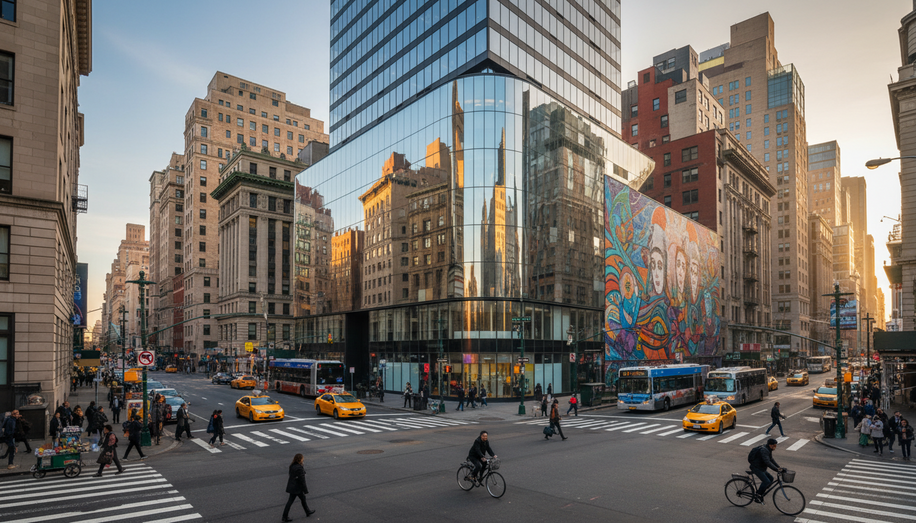

In the heart of bustling metropolises, where steel and glass skyscrapers pierce the sky, out-of-home (OOH) advertising is undergoing a profound evolution. No longer the garish intruder of cluttered billboards and neon overloads that once scarred urban skylines, modern OOH is emerging as a sophisticated partner in city design, weaving itself seamlessly into the architectural tapestry to elevate rather than erode the environment. This shift represents not just a cosmetic upgrade but a philosophical pivot: OOH as artful infrastructure, harmonizing commercial messaging with the pulse of public life.
Urban planners and designers are at the forefront of this transformation, advocating for OOH that respects and enhances its surroundings. Manosh De, an urban planner, articulates this vision eloquently: the convergence of OOH and urban planning offers a “unique opportunity to transform public space,” turning advertising into a tool for aesthetic, functional, and economic enrichment. Cities like London and Paris set exemplary standards, where bespoke advertising structures are crafted to complement local architecture. In these locales, displays adopt materials, scales, and lighting that echo the surrounding built environment, preserving the unique character of historic districts while injecting subtle vibrancy into contemporary zones. The result is a dialogue between commerce and culture, where OOH becomes an extension of the city’s identity rather than an imposition.
This design-forward ethos extends to digital out-of-home (DOOH) formats, which blend cutting-edge technology with architectural sensitivity. Once criticized for visual clutter, DOOH now redefines urban aesthetics through anamorphic displays—three-dimensional illusions that play with perspective—and dynamic visuals that adapt to time, weather, or pedestrian flow. In Seoul and Barcelona, interactive screens double as civic tools, delivering live event updates, navigational aids, and even artistic installations during festivals. These installations transform static plazas into interactive hubs, fostering community engagement without overwhelming the skyline. By collaborating with architects from the outset, planners ensure DOOH installations enhance rather than compete with landmarks, blurring the lines between technology, art, and infrastructure.
Environmental stewardship further underscores this integrative philosophy. Innovative projects demonstrate how OOH can support ecological goals alongside aesthetic ones. Utrecht’s “bee-friendly” bus stops, crowned with green roofs that host wildflowers and pollinator habitats, exemplify multifunctional design: advertising panels below fund the biodiversity above, creating oases in concrete jungles. Similarly, the “Dark Sky” initiatives in Sydney and Hong Kong employ adaptive lighting on digital billboards, dimming during off-peak hours to curb light pollution and protect nocturnal wildlife. Manosh De notes that such efforts align advertising with planetary needs, proving that commercial spaces can nurture both people and ecosystems. In smart cities, this manifests through data-driven displays that showcase digital art or public service announcements, infusing modernity into mundane corners while respecting local contexts and demographics.
Strategic placement amplifies these aesthetic triumphs. Urban panels, positioned along daily commutes—morning coffee runs, subway paths, lunch-hour strolls—integrate into the rhythm of city life, building subtle brand familiarity without dominating the view. In creative enclaves like Brooklyn’s Williamsburg or Los Angeles’ Arts District, panels align with the aspirational energy of tastemakers, their designs echoing street art murals or minimalist facades. Near retail hubs and entertainment districts, OOH blends passively into consumer journeys, influencing decisions through ambient presence rather than aggressive intrusion. This contextual sensitivity ensures displays enhance leisure zones, turning ordinary intersections into vibrant backdrops.
Looking ahead, the future of OOH lies in regulatory frameworks that mandate harmony. Singapore’s stringent advertising controls and Amsterdam’s design policies provide blueprints, balancing commercial viability with public welfare to cultivate livable, engaging cities. As boundaries between advertising, architecture, and urban planning dissolve, DOOH will likely spawn more collaborative masterpieces: screens co-designed with artists to mimic natural light patterns or augmented reality overlays that enrich without altering physical spaces. Already, these evolutions prove OOH’s potential to foster economically vibrant environments that feel intuitive and inspiring.
Ultimately, the art of integration reimagines OOH not as a necessary evil but as a civic asset. When executed with restraint and ingenuity, it elevates urban landscapes, inviting pedestrians to linger rather than look away. In doing so, cities transcend mere functionality, becoming symphonies of design where every element—from towering spires to glowing panels—contributes to a cohesive, captivating whole.