
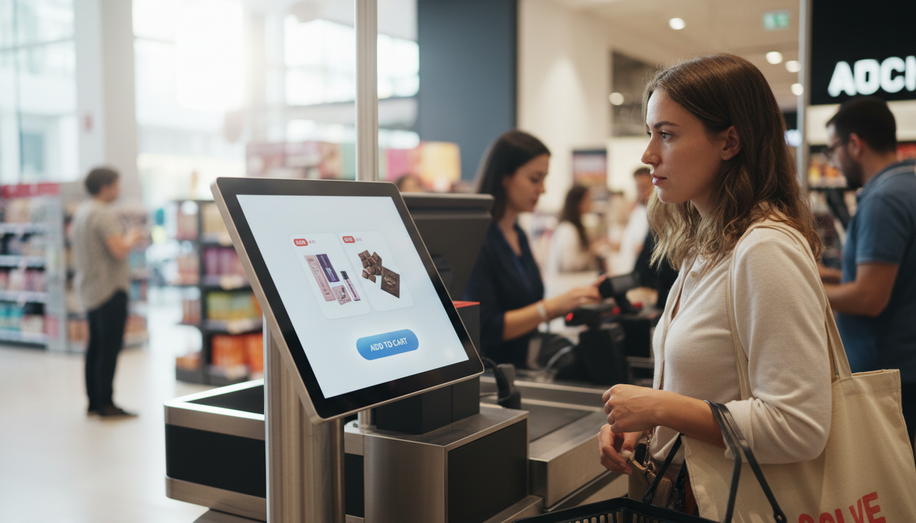

The retail landscape is undergoing a profound transformation as physical stores evolve from static shopping environments into dynamic advertising ecosystems. Retail media networks, once relegated to digital banners on e-commerce websites, are now extending directly into brick-and-mortar spaces through sophisticated in-store digital out-of-home (DOOH) strategies, fundamentally reshaping how brands reach consumers at the critical moment of purchase.
This evolution represents far more than a simple expansion of existing advertising channels. Retailers like Kroger and 7-Eleven are deploying digital shelf screens, checkout kiosks, and high-visibility displays that leverage rich first-party data to deliver targeted, measurable campaigns that bridge the precision of online advertising with real-world shopper behavior. The shift marks a departure from traditional out-of-home advertising, which relied heavily on static billboards with limited attribution capabilities. Today’s in-store retail media networks harness programmable screens at aisles, endcaps, and entrances to serve contextually relevant content in real time, creating what industry experts describe as a “beyond DOOH” approach.
The personalization capabilities embedded within these networks distinguish them fundamentally from conventional DOOH installations. In-store retail media can draw on real-time data to target individuals or specific customer segments as they navigate the aisles, with screens highlighting products based on previous purchases, loyalty card preferences, or even live stock levels. A shopper browsing snacks might encounter personalized promotions for complementary beverages on a nearby digital shelf screen, informed by loyalty program data or recent online browsing history. This level of granular targeting proves impossible with traditional DOOH installations that simply broadcast messages to broad audiences.
The consumer reception to these interventions has been remarkably positive. Research indicates that 96 percent of consumers view in-store ads favorably, contrasting sharply with the widespread fatigue associated with personal device advertising. This phenomenon underscores a critical insight: consumers welcome relevant messaging when it arrives at the point of purchase, particularly when it enhances their shopping experience rather than interrupting it.
From a measurement perspective, in-store retail media offers advantages that traditional DOOH cannot match. While impressions can be roughly estimated based on foot traffic, traditional out-of-home advertising provides little concrete data on engagement or behavioral influence. In-store retail media networks, by contrast, deliver real-time feedback and advanced metrics, enabling closed-loop reporting that tracks sales lift, conversion rates, and incremental revenue from specific campaigns. This accountability transforms screens from passive displays into active sales drivers, allowing retailers and brands to validate their investment with precision.
The scale of this evolution has become undeniable. Omnichannel retail media ad spending is forecast to reach $61.2 billion in 2025, with off-site components alone hitting $41.82 billion, signaling that in-store DOOH is no longer peripheral but a core pillar of retail media strategies. Retailers are monetizing foot traffic by offering premium placements to brands and bundling in-store screens with online and off-site advertisements into unified omnichannel packages that extend reach far beyond the physical store environment.
Looking ahead, the fusion of retail media and in-store DOOH promises a retail landscape where technology and data transform every aisle into an advertising opportunity. By combining location-based targeting, real-time inventory integration, and loyalty program data, retailers are creating shopping experiences that feel increasingly personalized and responsive to individual consumer needs. Platforms enabling seamless integration of digital signage into broader retail media networks are repurposing online creative assets—such as email banners and social advertisements—for physical displays while maintaining consistent messaging across all customer touchpoints.
For OOH specialists and advertising professionals, this evolution signals a renaissance for physical retail. Stores are reclaiming their centrality in the consumer journey, powered by data and technology that make every visit a high-ROI encounter. The convergence of retail media and in-store DOOH represents not merely a trend, but a structural shift in how brands connect with consumers at the moments that matter most.