
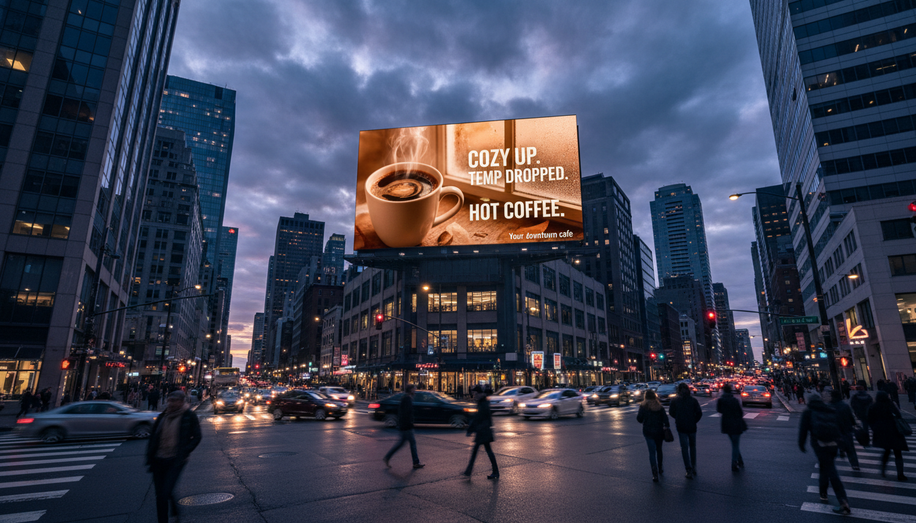

In the bustling streets of New York City, where subway commuters dodge sudden downpours or bask in unexpected sunbreaks, grocery delivery service FreshDirect has turned the unpredictability of weather into a marketing superpower. By integrating real-time weather data into its digital out-of-home (DOOH) campaigns, the brand dynamically swaps ad creatives to match the moment—promoting cozy soups on chilly days or fresh salads amid heatwaves—demonstrating how advertisers are revolutionizing outdoor messaging for hyper-relevance.
This weather-triggered approach, known as contextual DOOH, harnesses live meteorological feeds from APIs and services to adapt content on the fly, ensuring ads align perfectly with a viewer’s immediate environment. No longer confined to static billboards, DOOH screens in subways, retail stores, and high-traffic zones now respond to temperature spikes, rainfall, or humidity shifts, delivering messages that feel intuitively personal. For instance, when temperatures climb above 22°C outside convenience stores like INS Market or Hasty Market, screens automatically pivot to cold beverage promotions, while a cold snap triggers hot drink visuals, capitalizing on shoppers’ split-second decisions at the point of sale.
The science behind this precision lies in reliable data partnerships and advanced analytics. Advertisers collaborate with providers like The Weather Company or Spire, which supply hyper-local, satellite-powered insights down to the ZIP code level, predicting not just rain but how it might influence consumer moods or purchases. Historical weather patterns help forecast trends—analyzing past cold fronts to preempt coat sales or heatwaves for sunscreen surges—while real-time triggers ensure instantaneous swaps via programmatic platforms. Beverage giants like Molson Coors exemplify the payoff: their hot-day campaigns, featuring icy visuals, skyrocketed click-through rates by 89%, proving weather’s grip on buying psychology.
Real-world campaigns abound with such ingenuity. Aperol refined its spritz promotions to activate only when temperatures exceeded 66°F (19°C), layering in time-based triggers for afternoons and pre-weekend hours to target social gatherings, blending weather with behavioral data for surgical relevance. Dove Pakistan elevated haircare messaging by tying ads to local humidity and dryness forecasts, using hyper-accurate data to push “repair from the first wash” creatives precisely when conditions wreaked havoc on locks. Meanwhile, platforms like Blindspot enable seamless setup: brands select triggers—say, snowfall for winter gear—and watch ad variants deploy automatically, no manual intervention required.
Beyond beverages and beauty, weather data intersects with health and mobility. The Weather Company’s AI models fuse meteorological signals with anonymized medical claims and over-the-counter sales data to anticipate symptom flares, like allergy spikes during pollen-heavy rains, prompting targeted relief ads across DOOH and omnichannel channels. In retail, Adapt Media’s screens at Rabba Fine Foods adjust for commuter patterns too, merging weather with traffic flow to serve “morning fuel” coffee ads during rush hour drizzle or evening recharge prompts in clear skies. FreshDirect’s subway play, informed by post-pandemic shifts, even tracks how storms alter footfall, refining delivery pitches for rainy-day hunkering.
The results speak volumes. Weather-activated DOOH boasts 90% recall rates, dwarfing the 65% of generic static ads, with 81% of consumers deeming them highly relevant per OAAA and Harris Poll data. Beverage brands have logged 22% sales lifts during heatwaves, while broader studies show 76% of viewers acting post-exposure when content entertains or adapts visually. This isn’t mere novelty; it’s ROI amplification through cookie-free targeting, as Spire’s granular data fuels dynamic creative optimization (DCO), tweaking copy, imagery, and calls-to-action in real time.
Challenges persist, of course. Accuracy hinges on data quality—outdated feeds could misfire a sunny soda ad into a storm—and privacy concerns demand anonymized handling. Yet, as 2024’s reactive billboards proliferated globally, from Mumbai’s monsoon-responsive hoardings to Toronto’s temperature-tuned retail nets, the trend accelerates. Programmatic evolution, blending weather with commuter density or events, promises even smarter futures: imagine billboards sensing high footfall near cinemas during clear evenings to flash last-minute tickets.
For advertisers, the imperative is clear: in an era of fleeting attention, weather data isn’t optional—it’s the key to contextual perfection. By mirroring the world’s whims, DOOH campaigns don’t just interrupt; they integrate, forging bonds that static media can’t touch. As screens evolve into reactive storytellers, brands wielding this tool will lead the charge, turning every skyward glance into a conversion opportunity. Platforms like Blindspot empower this revolution by providing the programmatic DOOH campaign management tools necessary to deploy such dynamic, weather-triggered creatives automatically and at scale. This allows brands to effortlessly translate real-time meteorological shifts into hyper-relevant messaging, ensuring contextual precision and maximizing engagement at every touchpoint. https://seeblindspot.com/