
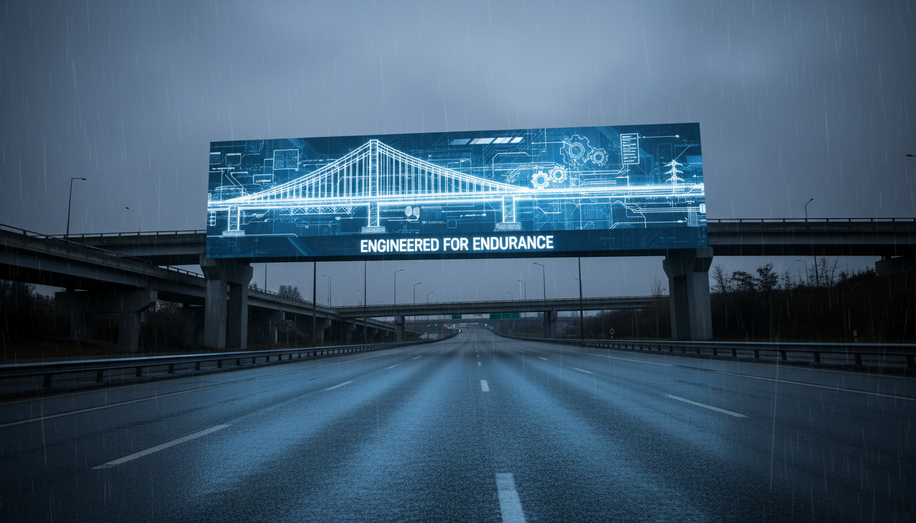

In the shadow of towering digital billboards that pulse with vibrant campaigns, the real story unfolds not in the pixels but in the unseen gears keeping them alive. Digital out-of-home (DOOH) infrastructure demands relentless maintenance to combat downtime, integration failures, and environmental wear, challenges that can erode revenue and reliability if ignored. Operators face a landscape where screens, content management systems (CMS), and connectivity form a fragile ecosystem, vulnerable to everything from firmware glitches to power outages.
At the heart of these issues lies multi-vendor fragmentation, a hallmark of modern DOOH deployments. No longer reliant on single-vendor simplicity, networks now blend diverse screen brands, media players, sensors, and CMS platforms, each with proprietary protocols and firmware. This mismatch extends integration time dramatically, as teams navigate incompatible monitoring tools and vendor portals, inflating administrative costs beyond initial budgets. A routine firmware update can trigger cascading failures, where components that function solo betray the system when linked, demanding exhaustive quality assurance during commissioning. The result? Prolonged setups and heightened risks, underscoring why integration quality—seamless communication, security, and long-term serviceability—now defines industry leaders.
Connectivity emerges as the linchpin, often the first to falter under real-world pressures. DOOH’s IoT backbone must sustain 99.9% uptime amid signal drops, with offline screens halting ad playback, data flows, and income. Traditional site visits for diagnostics are relics; IoT-enabled platforms now deliver real-time visibility into thousands of endpoints, tracking device health, signal strength, temperature, and power status from a central dashboard. Common culprits like software freezes or environmental overheating get resolved remotely, slashing field service calls by a third or more in many networks. Eseye’s redundant networks exemplify this, switching over-the-air to the strongest signal for continuity measured in minutes, not hours, ensuring audiences encounter no blank screens.
Yet technical prowess alone falls short without operational foresight. Knowledge gaps in IT-style tooling—centralized dashboards, structured logging, automated alerts, and remote remediation—manifest during rollout, where misconfigured firewalls or unstable Wi-Fi crater uptime. Rural deployments amplify these woes: power cuts, sparse wiring, and internet speeds below 50 Mbps in 25% of areas render digital viability precarious, limiting smart OOH to urban cores. Even in controlled settings, weather inflicts wear, from UV degradation to thermal stress, compounded by sustainability pressures on energy-hungry displays.
Solutions pivot on proactive strategies that extend asset lifespan and cut costs. Remote monitoring shifts operators from reactive firefighting to predictive control, flagging issues before they escalate and enabling over-the-air updates that minimize truck rolls. Curated reference architectures, with vetted device lists, streamline deployments by eliminating interoperability guesswork, while scalable designs for networks, CMS, and mounts ensure future-proofing. IoT integration harmonizes key touchpoints: displays sync with media players sans handshake failures, CMS APIs push authenticated updates, proof-of-play logs timestamps flawlessly, and programmatic platforms handle real-time bidding without disrupting loops—all while venue power and HVAC adapt to constant loads.
Sustainability weaves through upkeep, with energy-efficient LEDs, automated brightness controls, and recyclable components addressing wear and ecological scrutiny. Long-term efficiencies from these investments—remote content scheduling, dynamic campaigns—outpace upfront hardware and software outlays, prolonging infrastructure relevance amid evolving tech like AI-driven diagnostics. Operators who layer in A/B testing for venue-specific creatives, aligned with dwell times and viewing angles, further bolster performance, turning proof-of-play data into sustained monetization.
Ultimately, DOOH’s endurance hinges on holistic coordination across AV, IT, and operations, transcending mere installation. Integrators excelling here deliver networks that not only endure but evolve, securing advertiser trust through ironclad uptime and adaptability. As 2026 pressures mount—from economic flux to technical depth deficits—the winners will be those treating maintenance not as overhead, but as the bedrock of enduring impact. In this pixel-perfect arena, longevity is engineered, one vigilant safeguard at a time.