
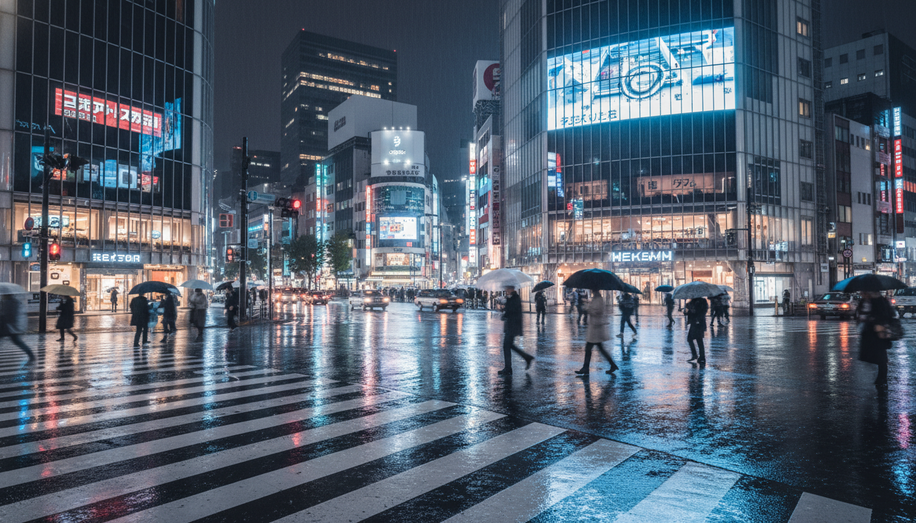

Strategic placement stands as one of the most critical determinants of out-of-home advertising success, yet it remains an often underestimated element in campaign planning. While creative excellence captures attention and messaging drives conversion, the physical location of an OOH asset ultimately determines whether that creative and messaging ever reach their intended audience in the first place. Understanding the interplay between urban planning, traffic flow, sightlines, and audience density transforms placement from a logistical afterthought into a science that can dramatically amplify campaign impact.
High-traffic locations with both pedestrian and vehicle flow form the foundation of effective OOH placement. This principle extends beyond simply counting foot traffic; it requires a nuanced understanding of how people move through urban and transit environments. Successful OOH campaigns strategically capitalize on their target audience by positioning media in venues where consumer behavior naturally aligns with campaign objectives. The strategic selection of venue types—airports, gyms, offices, grocery stores, and restaurants—should directly reflect where customers spend their time and which environments most influence their purchasing decisions.
The relationship between venue type and campaign format creates a crucial dimension of placement strategy. Large-format screens positioned in high-traffic city centers prove most effective for awareness-building campaigns that rely on maximum visibility and rapid impression generation. Conversely, smaller, more contextual placements near retail stores, transit hubs, or major events serve campaigns designed to drive action closer to the point of purchase. This differentiation acknowledges a fundamental truth: not all high-traffic locations serve identical marketing functions. A billboard on a major highway and a transit advertisement in a subway station operate within entirely different consumption contexts, each demanding tailored creative approaches and placement strategies.
Sightlines and visual hierarchy within placement environments merit deeper consideration than conventional site selection typically affords. When designing for OOH contexts, understanding dwell time proves essential. Roadside billboards and highway placements demand bold visuals and minimal copy that audiences can process almost instantaneously, given the limited seconds available for engagement. Conversely, environments with longer dwell times—elevators, airport terminals, waiting rooms—permit more detailed storytelling and complex visual narratives. This variance underscores how placement environments themselves shape what creative approaches can succeed, making site selection inseparable from creative development.
The emergence of digital out-of-home technology has refined placement science further. Geo, proximity, and point-of-interest targeting now enable campaigns to tailor ad placements based on real-time audience movement and environmental context. This data-driven approach transforms placement from static positioning into dynamic audience connection, where screens activate when target consumers enter specific geographic zones or proximity parameters. Diversifying screen formats and placements across multiple venues—combining large-format screens with smaller elevator and retail placements—maintains brand visibility across the entire customer journey while respecting the unique characteristics of each environment.
Beyond numbers and coordinates, successful OOH placement requires integration into broader campaign ecosystems. The industry increasingly recognizes that OOH campaigns achieve maximum impact when strategically integrated into comprehensive media plans rather than siloed as standalone executions. Interactive features offer a compelling example: a QR code on an OOH asset can transform a static billboard into a multi-touchpoint engagement tool, directing viewers to social media platforms and extending campaign impressions far beyond the physical location.
The most successful OOH campaigns demonstrate consistency between placement strategy, creative execution, and brand personality. This consistency creates coherence across multiple audience touchpoints, reinforcing brand recognition regardless of whether consumers encounter the advertisement during their commute, at a retail location, or in a transit hub. The challenge lies in achieving balance—ensuring that creative boldness never sacrifices the clarity necessary for quick comprehension, and that precision of message never eliminates the personality that distinguishes campaigns in crowded media environments.
As urban environments continue evolving and consumer movement patterns shift, OOH placement strategy must remain adaptive and evidence-driven. The convergence of location intelligence, audience data, and creative sophistication positions out-of-home advertising not as a secondary media consideration, but as a fundamental component of integrated marketing strategies where placement science directly determines campaign success.