
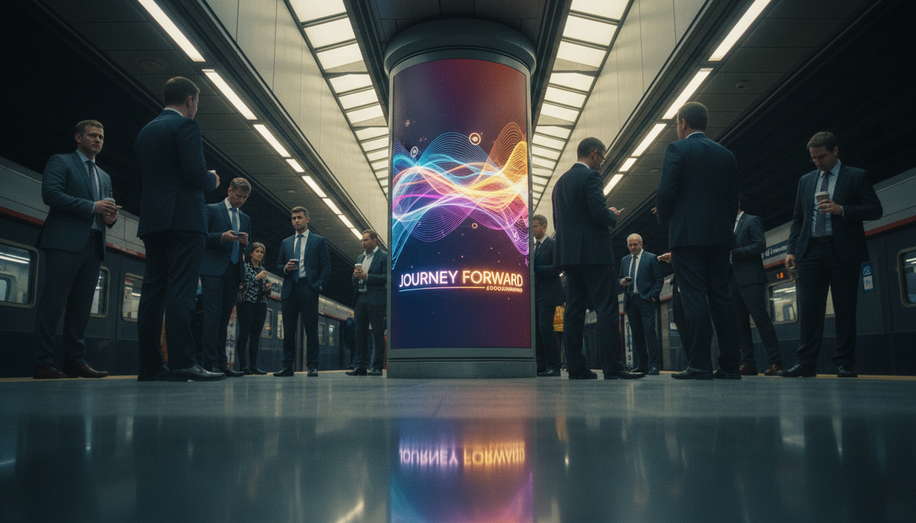

In urban centers worldwide, millions of commuters spend hours each week traveling through transit systems, creating an unprecedented opportunity for brands to connect with engaged audiences in spaces where traditional digital distractions hold minimal power. Transit advertising—the strategic placement of out-of-home media on buses, trains, subways, and within transit stations—has emerged as one of the most effective channels for reaching these mobile audiences, precisely because it transforms the unavoidable downtime of commuting into a captive viewing experience.
The fundamental advantage of transit advertising lies in its access to what researchers and media strategists call a “captive audience.” Unlike billboards glimpsed from speeding cars or digital ads that viewers actively scroll past, transit passengers have committed their attention to a journey they cannot escape. Commuters waiting for trains or sitting through bus rides face limited distractions and naturally become receptive to well-crafted advertising messages. This psychological state—where viewers have abundant time and few competing stimuli—creates ideal conditions for brand recall and message absorption. Digital advertisements can be blocked or skipped; transit ads, by contrast, work continuously, rain or shine, day or night, without relying on user engagement or algorithmic placement.
The reach of transit media extends far beyond the riders themselves. Exterior bus wraps, train graphics, and platform installations function as mobile billboards that traverse busy streets and neighborhoods, capturing the attention of pedestrians, cyclists, and drivers throughout the day. In densely populated urban areas like New York City or London, a single bus wrap can generate millions of impressions monthly from non-riders alone. Transit hubs, strategically located near shopping districts, business centers, and entertainment venues, amplify this exposure further, turning brief commutes into city-wide awareness campaigns.
The extended dwell time that commuters spend on public transportation is perhaps the most underutilized advantage in modern advertising. Whether riding a bus across town or waiting on a subway platform, individuals have ample opportunity to absorb and process advertising messages. This sustained exposure significantly increases brand familiarity and strengthens the connection between message and viewer. For advertisers, this translates directly into higher campaign effectiveness compared to traditional outdoor media formats with shorter viewing windows.
Transit advertising also delivers exceptional demographic versatility. Public transportation serves diverse populations across age groups, income levels, and lifestyles, allowing advertisers to reach broad audiences while maintaining the ability to target specific communities. By strategically selecting particular transit routes, stations, or neighborhoods, brands can tailor their messaging to resonate with localized audiences. Advertisers can even employ different languages and cultural themes to ensure relevance within specific communities, fostering genuine connection rather than generic reach.
Technology has amplified the strategic value of transit advertising further. Digital screens on buses, shelters, and terminals enable dynamic content rotation adjusted for time of day, weather conditions, or local events, allowing for sophisticated targeting and personalization. Interactive elements such as QR codes create additional engagement opportunities, bridging the gap between outdoor media and digital conversion pathways. These innovations maintain transit advertising’s core strength—unblockable visibility—while adding the precision of programmatic and data-driven marketing.
For businesses seeking to rebuild brand presence and drive engagement in urban markets, transit advertising offers measurable advantages over increasingly fragmented digital channels. The integration of out-of-home media into public transportation systems capitalizes on behavioral certainty: commuters will be there, repeatedly, with attention to spare. As cities continue prioritizing public transit infrastructure and urban recovery accelerates, the captive audience advantage of transit advertising becomes increasingly valuable. Brands that recognize and leverage this opportunity position themselves to deliver unforgettable messages to engaged audiences precisely where those audiences are most receptive—in motion through the urban landscape.