
In the heat of political battles, from gritty local races to high-stakes national showdowns, out-of-home (OOH) advertising stands as a towering force, commanding attention on billboards, transit hubs, and digital screens where voters cannot scroll away. Unlike the fleeting digital ads that blend into feeds saturated with misinformation, OOH delivers bold, unmissable messages that pierce through the noise, shaping public opinion with immediacy and scale. As the 2026 election cycle ramps up to become one of the most fiercely contested in history, campaigns are pouring record investments into these formats, recognizing their power to sway undecided voters and amplify narratives amid deepening polarization.
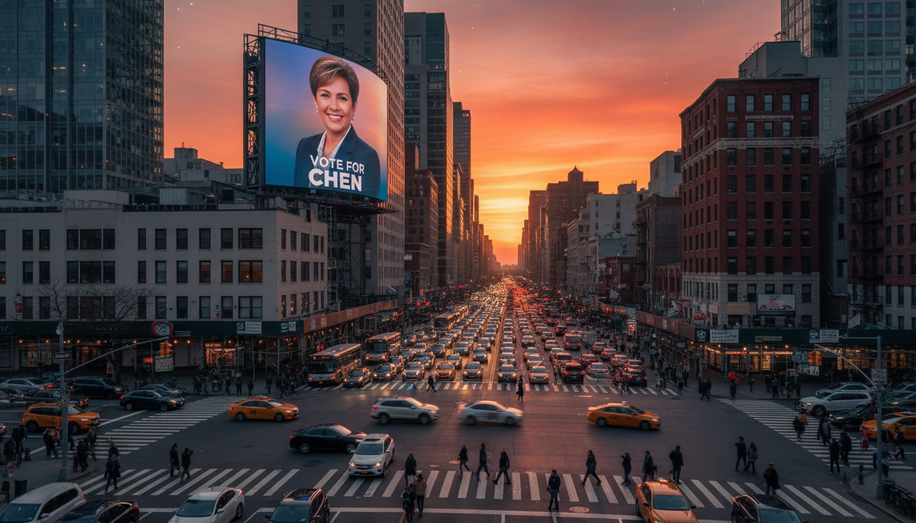
Billboards, the quintessential OOH workhorse, have long been strategic linchpins in political warfare. Towering over highways and urban arteries, they blast larger-than-life visuals and slogans that linger in commuters’ minds during daily routines. Clear Channel Outdoor, a dominant player, equips campaigns with innovative billboard solutions tailored for the 2024 general election and beyond, positioning ads precisely where voters pump gas, dine out, or navigate commutes—hyper-local targeting that ties messages to regional pain points like soaring fuel prices or ballot-specific issues. This geographic precision turns passive drives into active persuasion moments; a family eyeing a restaurant menu encounters tailored appeals on local governance, while highway travelers confront economic critiques head-on.
The data underscores OOH’s voter impact. Morning Consult research reveals that 68% of likely voters have encountered political OOH ads, with 50% spotting them in the past month alone. Among those exposed, 56% deem the ads truthful and accurate, and 49% report personal influence—including 20% who find them very influential—outpacing many digital counterparts in a fragmented media landscape. Digital out-of-home (DOOH) amplifies this edge: Screenverse’s networks in high-traffic zones boast that 76% of adults act on their devices post-exposure, while 61% view OOH favorably, exerting pronounced sway over 60% of Gen Z and Millennials. In 2024, OOH ad revenue surged 3.4% to $2.78 billion in Q2, fueled by political spend that Anna Bager of the OOH Association notes as part of record growth, with 68% of likely voters seeing these ads and nearly half influenced.
This resurgence traces back to cycles like 2022 midterms, where political OOH spending skyrocketed 113% year-over-year and 90% above 2018 levels, hitting records amid $9 billion total ad outlays. For 2026, early indicators point to even heavier capital intensity, with OOH’s competitive CPMs, uncluttered environments, and constant visibility making it indispensable for primaries, fundraising drives, and turnout pushes. Campaigns leverage its rapid awareness-building; a single provocative billboard sparks social media buzz and earned media, magnifying impressions exponentially. BM Outdoor highlights OOH’s role in tackling economic anxieties and fostering trust, essential in an era of distrust.
Yet OOH’s influence extends beyond metrics to psychological heft. In local races, where turnout hinges on name recognition, strategically placed signs near polling stations or community centers remind voters of candidates’ faces and platforms. National efforts scale this up: presidential hopefuls deploy DOOH for dynamic messaging, swapping content instantly to counter opponents or pivot on breaking news. Fliphound’s digital billboards, bookable from $10 daily, democratize access for underdogs, offering free templates to target precincts with surgical efficiency. Publishers revel in the boom—84% report climbing political rates—integrating OOH into omnichannel strategies that bridge physical and digital realms.
Critics question OOH’s sway in a data-driven age, but evidence counters: its “meet voters where they are” ethos cuts through ad fatigue, fostering conversations that digital skips cannot match. As 2026 unfolds, expect billboards to evolve with AI-driven personalization and real-time triggers, further entrenching OOH as the medium that doesn’t just inform opinion but molds it, one unignorable glance at a time. In elections defined by visibility, OOH ensures no voter drives by uninfluenced.
To truly maximize OOH’s influence in upcoming elections, campaigns need more than visibility – they require precision and measurable impact. Blindspot delivers this advantage, offering advanced location intelligence for hyper-local targeting, programmatic DOOH management for dynamic messaging, and robust ROI measurement to prove sway over undecided voters. This ensures every impression is strategic, responsive, and accountable in the race for public opinion. Learn more at https://seeblindspot.com/