
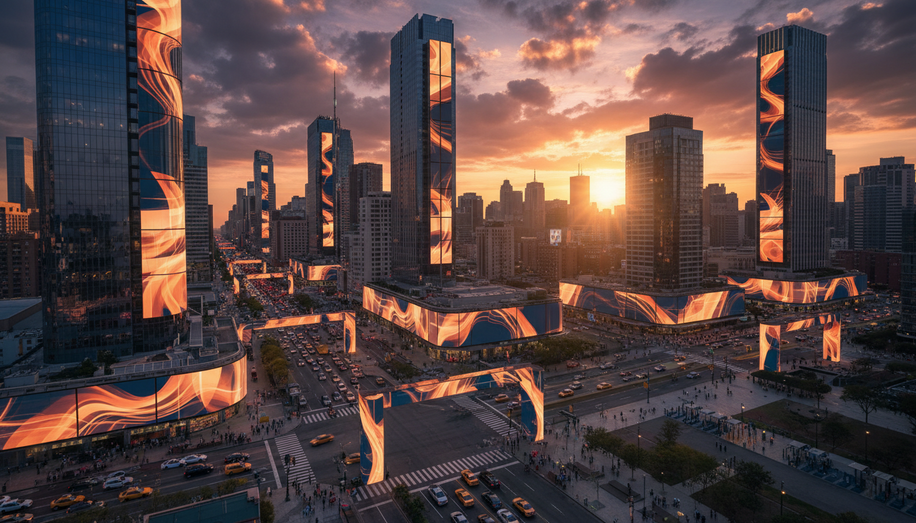

In the bustling urban landscape, where eyes dart between screens and streets, out-of-home (OOH) advertising has evolved from static billboards to dynamic storytelling canvases. Brands are increasingly harnessing sequential messaging across multiple placements to guide audiences through complete narratives, transforming fleeting glances into immersive journeys that build anticipation and emotional bonds.
This approach taps into the human affinity for stories, which studies show people remember up to 22 times better than isolated facts. Unlike a single ad that shouts a slogan, a series of OOH executions unfolds like chapters in a book, each placement revealing a new layer. Consider a campaign where the first billboard introduces a protagonist facing a relatable dilemma—a commuter stuck in traffic, yearning for escape. The next, blocks away, heightens tension with a cliffhanger, perhaps the character discovering a hidden path. By the third touchpoint, resolution arrives: the brand as the hero’s ally, delivering relief. This “to be continued” tactic leverages our innate curiosity, compelling passersby to seek the next installment subconsciously.
The power lies in context and sequencing. OOH’s real-world immersion adds a fourth dimension—time and place—that digital ads can’t match. Nancy Duarte, a renowned storytelling expert, advocates structuring campaigns with a clear beginning, middle, and end, where each ad serves as a narrative beat. A morning subway poster might pose a question; an afternoon digital screen responds with intrigue; evening placements on high-traffic bridges deliver payoff. This progression mirrors life’s rhythm, making the story feel organic and unavoidable. In cities, placements near landmarks or tied to local culture amplify relevance—a narrative unfolding along a iconic route becomes part of the environment itself.
Digital out-of-home (DOOH) elevates this further, enabling real-time evolution. Dynamic screens can adapt narratives based on weather, events, or audience data, ensuring the story feels alive. For instance, a brand might launch a mystery on screens during rush hour, with user-generated content or social media tie-ins inviting participation via QR codes or hashtags. Interactivity turns passive viewers into co-authors, fostering memorable experiences that spark word-of-mouth. JCDecaux highlights how DOOH’s data integration allows progressive storytelling across urban zones, contextualizing messages live—rainy days prompting a comforting tale, festivals igniting celebratory arcs.
Yet crafting these narratives demands precision. Start with a core message: one unforgettable takeaway distilled into visuals that process 60,000 times faster than text. Simplicity reigns in OOH’s brief exposure windows—bold imagery, evocative phrases, and emotional hooks like humor, nostalgia, or surprise create mini-stories per placement while building toward the whole. The brand plays a supporting role, demonstrating value through the plot rather than overt claims, allowing audiences to self-associate.
Successful campaigns illustrate the impact. View Media OOH describes sequences where partial stories on sequential billboards mimic serialized TV, thriving on cliffhangers to drive retention and recall. Framen’s DOOH strategies emphasize innovation: interactive displays and influencer integrations extend narratives beyond physical spaces, cutting through noise to evoke lasting emotions that influence purchases. Elevate Media notes emotional resonance boosts engagement, with humor or unexpected twists encouraging shares and discussions, forging tribal loyalties.
Challenges persist—coordinating placements requires meticulous planning to ensure logical flow without repetition. Budgets must stretch across touchpoints, and metrics like footfall attribution or social lift prove ROI. Still, the rewards are clear: sequential OOH builds deeper connections than fragmented digital blasts, turning public spaces into shared storytelling arenas.
Ultimately, this art form positions OOH as a narrative powerhouse in a fragmented media world. By guiding audiences through multi-touchpoint tales, brands don’t just advertise—they captivate, immersing urban dwellers in stories that linger long after the commute ends. As consumers navigate daily paths, these evolving narratives remind us that the most compelling ads aren’t seen; they’re experienced. To orchestrate these complex, dynamic narratives effectively, platforms like Blindspot provide essential capabilities, from precise location intelligence for seamless sequential placement to real-time programmatic management that ensures contextual relevance and measurable ROI across every chapter of the urban story. https://seeblindspot.com/