
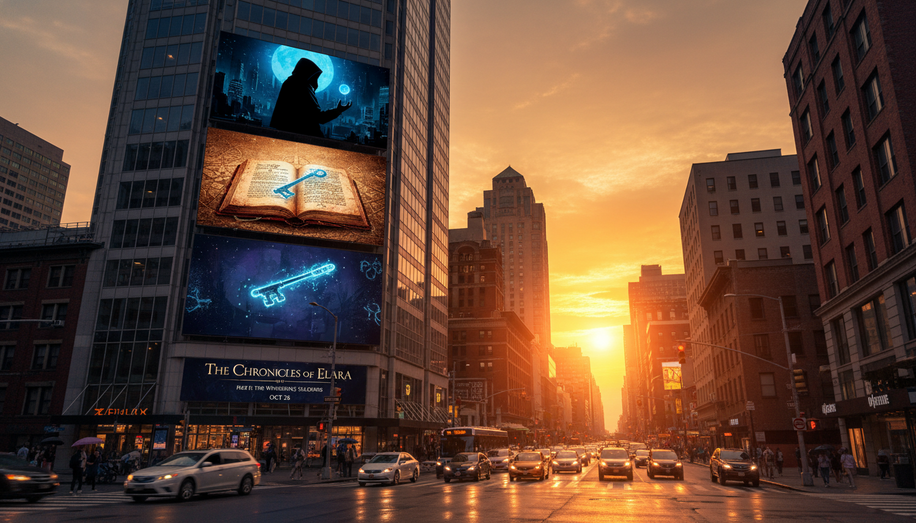

In the bustling corridors of urban life, where commuters rush past billboards and drivers glance at digital displays, out-of-home (OOH) advertising is evolving from static messages to serialized sagas. Brands are harnessing the power of sequential storytelling, unfolding narratives across strategically placed OOH assets to captivate audiences over time or along familiar routes, much like the episodic dramas that once enthralled readers in newspapers. This approach transforms passive glances into active anticipation, turning everyday journeys into immersive brand experiences.
Consider the psychology at play: serialized content thrives on the human craving for continuation, a loop of engagement that keeps audiences returning, just as television series or digital platforms like Wattpad do for fiction lovers. In OOH, this translates to a series of posters, digital screens, or transit wraps that reveal story fragments in sequence. A commuter might spot the intriguing opening on a subway platform— a mysterious figure in shadows, hinting at intrigue—then encounter the rising tension at the next station, building emotional investment with each stop. Along a highway, sequential billboards could advance a plot point by point, rewarding drivers who recognize the progression. This real-world serialization leverages OOH’s unique immersion, placing audiences physically within the narrative, heightening senses through scale, motion, and context.
JCDecaux, a global OOH leader, emphasizes that effective storytelling in this medium demands standout openings to snag attention in a distracted world, followed by clever twists—humorous, surprising, or emotional—to sustain it. Each placement must deliver partial satisfaction, echoing Nobel laureate Daniel Kahneman’s “peak-end” rule, where experiences linger based on their climactic moments. Yet the true genius lies in multi-touchpoint orchestration: a brand positions initial intrigue near high-traffic hubs like train stations, mid-story developments along commute paths, and cliffhangers at endpoints such as shopping districts. Digital out-of-home (DOOH) amplifies this with data-driven dynamism, tailoring installments to time, weather, or events—for instance, escalating a adventure tale during a city festival.
Brands like those in beverage or automotive sectors have pioneered this. Imagine a coffee chain launching a serialized tale of a barista’s quest for the perfect brew: Week one’s billboard near offices teases a burnt batch disaster; the next, along lunch routes, reveals a secret ingredient hunt; culminating in a satisfying reveal at retail clusters, complete with QR codes for “next episode” app unlocks. This not only builds recall but fosters shared experiences—passersby discuss plot twists on social media, bonding over the brand like fans of a hit show. Serialized OOH taps into episodic storytelling’s proven engagement: regular “releases” via timed campaigns create anticipation akin to weekly fiction drops, boosting loyalty and retention.
Crafting these narratives requires precision. Start with a central arc that positions the brand as enabler, not hero—subtle product integration ensures authenticity, avoiding overt sales pitches. Structure episodes for bite-sized impact: impactful visuals for split-second reads, cliffhangers to propel forward momentum, and evolving characters for emotional pull. Placement strategy is paramount; map audience flows using urban data—proximity to homes, work, or leisure spots maximizes repeat exposure. For route-based tales, align with traffic patterns: a tourism campaign might serialize a city’s hidden gems along visitor shuttles, each stop unveiling lore tied to local landmarks.
DOOH introduces interactivity, blending static roots with digital flair. Programmable screens can sync stories across a network, revealing plot advances city-wide or personalizing via Bluetooth beacons—passersby “unlock” continuations on phones. This multisensory evolution mirrors serialized fiction’s digital renaissance on platforms like Kindle Vella, where authors monetize through freemium episodes and reader tips, fostering communities hungry for more. In OOH, the payoff mirrors this: heightened top-of-mind awareness, measurable lifts in foot traffic, and long-term affinity as audiences self-associate with the brand’s world.
Challenges persist—timing must sync with production cycles, and analytics track sequential impact via QR scans or app correlations. Yet successes abound: campaigns blending OOH serialization with social teasers amplify reach, turning local encounters into viral phenomena. As urban mobility digitizes, hybrid OOH stories will dominate, keeping brands central in consumers’ daily narratives.
Ultimately, serialized OOH redefines advertising as co-authored journeys. By parceling compelling tales across placements, brands don’t just advertise—they enthrall, ensuring audiences chase the next chapter, one street at a time. This format’s enduring appeal lies in its mimicry of life’s own serialization: fragmented yet connected, always promising more.
For brands looking to master this intricate art, platforms like Blindspot offer the precision tools necessary. Its advanced location intelligence and programmatic DOOH capabilities enable the strategic orchestration and dynamic delivery of sequential narratives across optimal touchpoints, while robust audience measurement and real-time performance tracking provide critical insights into story progression and ROI. This empowers advertisers to refine their narratives, ensuring each chapter resonates and drives deeper engagement with every step of the journey. https://seeblindspot.com/