
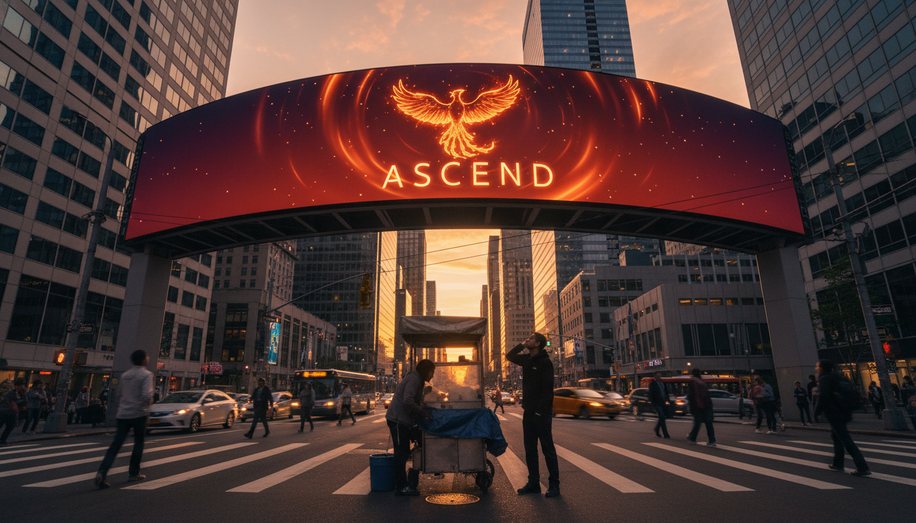

In the relentless rush of urban life, where drivers glance at billboards for mere seconds and transit riders swipe past ads in a blur, brands face an impossible challenge: forge a connection that lingers. Storytelling in out-of-home (OOH) advertising masters this feat by distilling epic narratives into split-second bursts of visual and textual genius, turning fleeting exposures into unforgettable impressions. Unlike digital scrolls offering endless dwell time, OOH demands precision—bold imagery and razor-sharp copy that hijack the brain’s attention mechanisms before the moment vanishes.
The power lies in simplicity. Outdoor audiences don’t have time for complexity; they crave clarity that hits like a thunderclap. Experts emphasize promoting simplicity and clarity as foundational, ensuring narratives are succinct and glanceable, with limited space forcing every word and pixel to pull double duty. A single, potent image paired with evocative text can evoke emotion, spark curiosity, or ignite aspiration, far outpacing dry features or specs. Consider how outdoor brands succeed by anchoring products to real-world outcomes: not “20L capacity,” but the confidence of a multi-day trek under stormy skies, where gear becomes the silent hero in a tale of triumph. This mirrors human decision-making, inviting viewers into a story they see themselves starring in, rather than shoving a sales pitch.
Visuals amplify the narrative’s punch. Loud visuals aren’t just pretty pictures; they’re emotional anchors that reinforce the story’s core before text even registers. A climber summiting a jagged peak, sweat-streaked face alight with awe, conveys one strong emotion—triumph—more potently than paragraphs of product specs. Billboards excel here, blending bold graphics with concise messaging to create a canvas where empathy, nostalgia, or joy flickers to life in an instant. Transit ads, squeezed into subway cars or bus shelters, leverage this further by capturing peak moments: the breathtaking vista reveal, the finish-line surge, freezing the adventure’s climax for commuters’ stolen glances.
Yet crafting these micro-stories requires discipline. First, identify your audience—their pains, dreams, and triggers—to tailor tales that resonate personally. A family brand might evoke parental pride in a child’s first hike; an adventure gear maker, the raw thrill of solitude in wild expanses. Human-centric focus is key: spotlight real people—customers, ambassadors—over products, sharing personal journeys of overcoming odds or communal triumphs. This humanizes the brand, fostering deeper connections that transcend the ad’s lifespan. Emotional storytelling elevates it further, tapping universal feelings to drive impact; a billboard evoking curiosity about a half-told tale compels viewers to seek resolution later, online or in-store.
Challenges abound in this high-stakes medium. Cluttered streets mean ads must cut through noise with unrelenting relevance—no room for convoluted plots. Testing proves essential: what captivates in creative briefs may flop in motion, underscoring why brands treat storytelling as a system, aligning visuals, copy, and media buys for cohesive impact. Lessons from social media translate seamlessly—short-form mastery honed on TikTok refines OOH’s blink-of-an-eye demands, prioritizing relatable highs and lows over specs. Inclusivity broadens appeal: diverse faces and stories from varied communities make narratives universally magnetic, turning passive passersby into brand advocates.
Real-world triumphs illustrate the payoff. Imagine a transit ad series for an outdoor apparel line: Panel one shows a weary hiker at dusk, pack heavy, eyes downcast. The next, mere stops later, reveals the dawn summit glow, tagline whispering, “Rise with us.” Viewers, piecing the arc subconsciously, feel the emotional arc—struggle to victory—imprinting the brand as enabler. Another: a billboard’s split image juxtaposes urban grind against alpine escape, caption “Escape the specs. Live the story.” It sidesteps features for aspiration, mirroring how brains retain narratives seven times better than facts.
For brands, the imperative is clear: evolve beyond slogans. In 2026’s saturated OOH landscape, those mastering split-second storytelling don’t just advertise—they inspire action, humanize their mission, and spark conversations that echo far beyond the drive-by. By weaving emotions into visuals and copy that demand no more than a glance yet deliver a lifetime echo, advertisers transform billboards and buses into portals of possibility. The result? Memorable messages that capture hearts, win loyalty, and prove narrative’s enduring might in an era of ephemeral attention.
Brands striving to perfect this high-stakes art of micro-storytelling can turn to platforms like Blindspot. Its audience measurement and location intelligence capabilities ensure narratives are precisely tailored and placed to resonate deeply with specific viewers, while real-time performance tracking empowers advertisers to test and optimize the impact of every visual and textual nuance. This strategic approach transforms fleeting exposures into enduring brand stories that genuinely capture hearts. Discover more at https://seeblindspot.com/