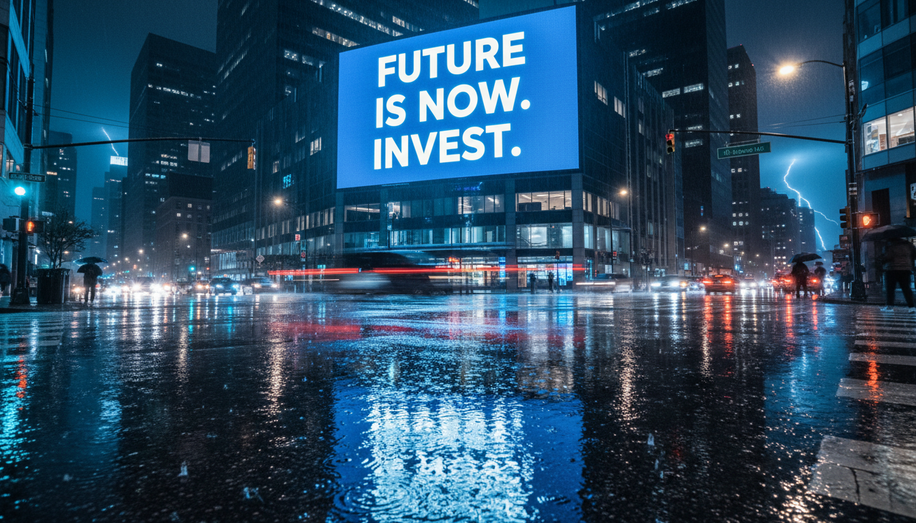

In the split-second world of out-of-home advertising, where drivers glance at billboards from 60 miles per hour and pedestrians spare a fleeting look at a bus shelter poster, copywriters face a brutal constraint: time. Unlike digital ads that users can pause or scroll back to, OOH demands instant comprehension. A message must land, stick, and compel action before the moment vanishes. This high-stakes craft of condensation—boiling down complex ideas into mere words—separates forgettable signage from campaigns that ignite brand recall and drive traffic.
The core challenge lies in the viewer’s periphery. Research from the Out of Home Advertising Association of America underscores that optimal OOH copy rarely exceeds seven words. Why? At typical viewing speeds, the average exposure lasts three to five seconds. Beyond that threshold, comprehension plummets. “Less is more” isn’t a cliché here; it’s physics. Veteran copywriter Sarah Jennings, who penned Coca-Cola’s iconic “Taste the Feeling” billboard series, recalls her mantra: “If it can’t be read from a hundred feet away in two seconds, it’s dead.” This brevity forces writers to excavate the essence of a brand’s promise, stripping away fluff to reveal raw emotional hooks.
Consider the pitfalls of verbosity. Overloaded copy creates internal competition, where elements vie for attention like rivals in a crowded frame. Industry data from ATA Outdoor Media shows that ads with too many images or phrases dilute impact, reducing retention by up to 40 percent. The solution? Ruthless editing. Start with the full pitch—benefits, features, calls to action—and slash until only the indispensable remains. For instance, a skincare brand might begin with “Discover our revolutionary formula that hydrates, brightens, and protects with natural ingredients—shop now!” After refinement: “Glow Naturally. Shop Now.” Four words. Crystal clear. Punchy. Actionable.
Visual symbiosis elevates this economy of language. Copy doesn’t float alone; it dances with bold, contrasting colors and massive fonts. High-contrast pairings—think electric yellow text on midnight blue—boost legibility from afar, as proven in visibility studies by Bay Media. Bold hues like red and orange grab the eye amid urban clutter, increasing recall by 38 percent according to The Campus Agency. Copywriters must anticipate this partnership early, scripting phrases that amplify imagery rather than compete. A fitness chain’s “Sweat Now, Shine Later” pairs perfectly with a sweat-drenched athlete mid-lunge, evoking aspiration without explanation.
Emotional resonance turns fleeting reads into lasting impressions. In OOH’s glance economy, logic takes a backseat to feeling. Power words—urgent, exclusive, transformative—ignite subconscious urges. “Unlock Your Peak” for a gym doesn’t just inform; it whispers potential. Emotional appeals tap universal triggers: fear of missing out (“Last Chance: 50% Off”), joy (“Pure Bliss Awaits”), or belonging (“Join the Winners”). Ad copy expert from Seek Marketing Partners emphasizes benefit over feature: not “Our shoes have advanced cushioning,” but “Run Pain-Free Forever.” Specificity sells—numbers like “10lbs in 30 Days” anchor vague promises, making them tangible amid the blur of motion.
Strategic calls to action bridge the gap from awareness to conversion. In an era of QR code proliferation—up 26 percent in digital OOH since 2020—phrases like “Scan to Save” or custom short URLs (“Bit.ly/YourDeal”) funnel passersby to digital destinations. Placement matters too; high-traffic zones amplify these prompts. A New York transit campaign for a ride-share app used “Tap Here for Instant Ride,” with scannable codes yielding a 15 percent scan rate. Yet, CTAs must remain invisible in their obviousness—no convoluted instructions, just imperative verbs that propel.
Testing refines this craft. A/B trials on mockups simulate real-world conditions: project at highway speeds, gauge readability under dusk lighting. Tools like Optimizely’s OOH simulators now incorporate eye-tracking data, revealing how phrasing tweaks lift engagement. Common traps abound—vague messaging, feature dumps, ignoring mobile handoffs—but avoidance comes through iteration. Spellcheck is non-negotiable; a typo at 70 mph becomes a punchline.
Ultimately, OOH copywriting rewards the distiller, not the storyteller. It’s poetry under pressure, where every syllable counts toward maximum impact. Brands like Nike (“Just Do It”) and Apple (“Think Different”) prove the formula: simple, bold, human. In 2026’s fragmented media landscape, where attention fragments further, mastering this art doesn’t just advertise—it owns the moment, converting split seconds into sales and loyalty that endures long after the drive-by.