
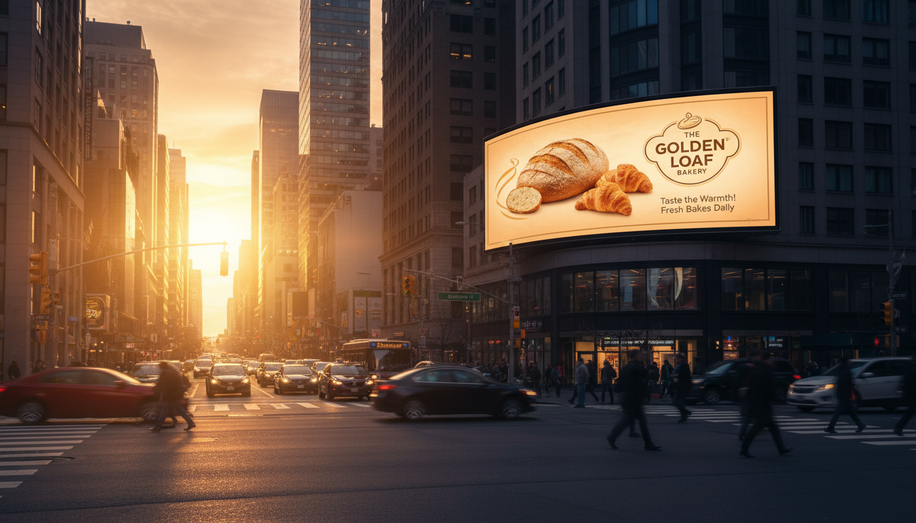

In the bustling heart of any neighborhood, small shops and restaurants thrive on foot traffic from locals who know their menus by heart or their shelves stocked with just the right finds. Yet in an era dominated by online giants, these hyperlocal businesses often struggle to stand out amid the digital noise. Out-of-home (OOH) advertising offers a powerful antidote, transforming static streets into dynamic pathways to increased visibility and store visits. By placing eye-catching ads precisely where potential customers live, work, and wander, small operators can reclaim their turf and drive real results without breaking the bank.
Hyperlocal OOH zeroes in on geography like a laser, targeting neighborhoods, high-traffic corners, and points of interest that align with a business’s core audience. Consider a family-owned Italian trattoria in a residential pocket of Chicago. A digital billboard at the end of the block or a bus shelter ad just steps from the local grocery store doesn’t just broadcast a message—it whispers directly to passersby heading home with dinner plans in mind. Industry experts note that such proximity-based placements boost engagement because they catch consumers at peak receptivity, whether they’re commuting, shopping, or simply strolling. As one OOH veteran with decades in the field explains, “Hyper-local strategies dramatically increase brand visibility by ensuring your message reaches ideal customers when they’re most likely to act—right in their daily routines.”
The mechanics are straightforward yet potent. Small businesses start by mapping their “catchment area”—that immediate vicinity where 70 to 80 percent of their customers reside, often within a mile or two. Data from traffic patterns, mobile geolocation, and even socio-demographic insights guide ad placements on billboards, transit wraps, or digital out-of-home (DOOH) screens. For instance, a boutique coffee shop might secure a taxi-top ad circulating the neighborhood or a street-level panel near the community park, flashing promotions like “Half-off lattes after 3 PM” synced to local rush hours. These aren’t scattershot efforts; they’re surgical strikes. Studies show OOH in high-traffic local spots can generate repeated exposures, fostering familiarity that translates to impulse visits. One retailer reported a 20 percent uptick in foot traffic after a four-week campaign of neighborhood billboards highlighting limited-time offers, proving the format’s knack for creating urgency.
What sets OOH apart for cash-strapped independents is its cost-effectiveness. Unlike pricey social media boosts or SEO overhauls, local OOH delivers a low cost per thousand impressions, especially in targeted markets. A modest bus shelter ad or digital panel can reach thousands daily for a fraction of television spots, with no algorithms deciding visibility. Small restaurants, in particular, benefit from this equity. Picture a taco stand near a university deploying transit ads on buses that loop campus routes, directing students to “Grab tacos at Exit 5—two blocks away!” The directional cues—highway exits, simple landmarks—make conversion seamless, turning awareness into action. Real-world examples abound: a New York deli chain saw sales spike during holidays after OOH ads blanketed subway stations with mouthwatering visuals and QR codes linking to menus, blending physical enticement with digital ease.
Dynamic capabilities elevate the game further. DOOH panels allow real-time tweaks—swapping sunny-day specials for rainy-night comforts based on weather APIs, or amplifying buzz around local events like street fairs. Integrating mobile elements supercharges this: QR codes on a café’s street poster invite scans for loyalty discounts, bridging the gap between sidewalk sighting and storefront entry. This interactivity not only measures engagement through scan rates but also amplifies reach via social shares, as delighted customers post their finds online. Brands pairing OOH with digital see 2-3 times higher engagement, underscoring its role across the marketing funnel—from top-of-mind awareness to bottom-line sales.
For small shops and eateries, success hinges on smart execution. Research traffic data to pinpoint hotspots: that intersection where commuters idle or the path to weekend markets. Tailor messaging to resonate hyperlocally—shout out neighborhood heroes, nod to community quirks, or tie into seasonal happenings. A bookstore might tout “Local author signings this Saturday” on panels near the library, while a florist leverages event proximity with “Roses for the block party—around the corner!” Avoid broad strokes; specificity breeds connection. Partner with local OOH providers who offer flexible buys, like short-term digital slots, to test and scale.
Critics might argue digital trumps all, but OOH’s unskippable presence cuts through screen fatigue. Consumers can’t scroll past a towering billboard or swipe away a transit wrap; it’s advertising woven into life. When layered with SEO tweaks—prompting post-exposure searches—or cross-channel pushes, it builds a virtuous cycle: more visibility, more visits, more loyalty. For the neighborhood jeweler or pho house fighting for survival, OOH isn’t just promotion—it’s a lifeline to the community pulse.
Ultimately, hyperlocal OOH empowers small businesses to punch above their weight. By owning their streets, they don’t just drive foot traffic; they cultivate lasting bonds. In a world of fleeting clicks, that local “aha” moment—spotting your ad en route to errands—turns strangers into regulars, one visit at a time.
For small businesses looking to harness this power, platforms like Blindspot offer a sophisticated edge. By leveraging advanced location intelligence and programmatic DOOH campaign management, Blindspot empowers local operators to precisely target their ideal customers, track real-time performance, and measure the direct impact on foot traffic, ensuring every ad dollar is optimized for maximum community engagement and ROI. Learn more at https://seeblindspot.com/