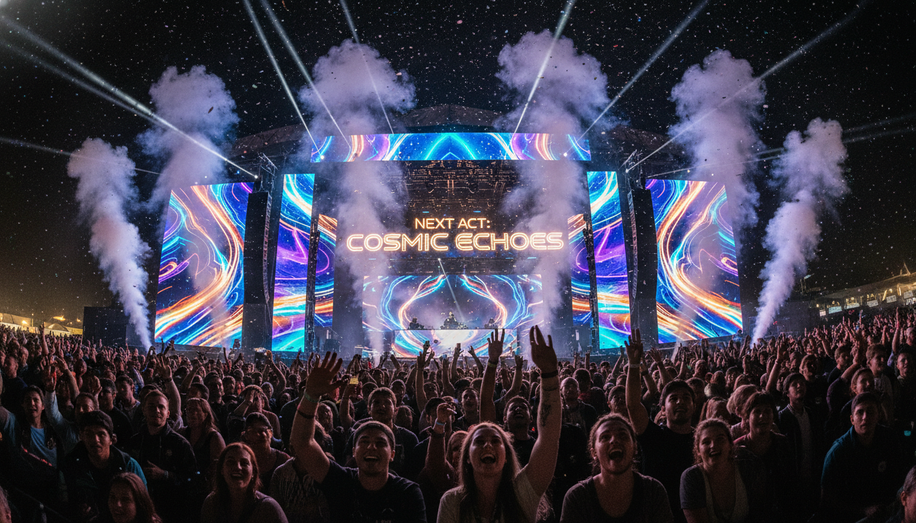

From the moment a save-the-date drops to the last encore or closing announcement, festivals and major events live or die by momentum. That momentum increasingly starts – and stays – outside the venue. Out-of-home advertising has become the connective tissue of modern event marketing, building buzz in the weeks before doors open, shepherding crowds in real time, and extending the experience long after the lights go down.
Pre-event, OOH delivers what digital alone can’t: physical presence in the same streets, stations and neighborhoods where anticipation grows. Billboards on arterial roads, transit posters around music districts, digital screens in nightlife hubs – these placements don’t just raise awareness, they normalize the idea that “this is the event everyone’s going to.” Repeated exposure on daily commutes turns a one-off impression into a drumbeat of familiarity, critical for first-year festivals and new conventions that lack historic equity. For established properties, outdoor creative can evolve from basic information into storytelling: teasing lineups, revealing headliners by phases, or showcasing past highlights to activate nostalgia and FOMO in equal measure.
Proximity matters as much as frequency. Smart organizers think like attendees and map their journey long before tickets are scanned. Are fans driving in from neighboring cities? Are visitors flying in and transferring via rail or rideshare? OOH at highway approaches, airport corridors, and transit interchanges catches those audiences at precisely the moments they are making plans: where to stay, when to arrive, how to get there, and what else to do around the event. These are ideal touchpoints for layered messages – from early “tickets on sale now” to late-stage “last chance” pushes as the date looms, all calibrated to audience mindset and travel patterns.
For sponsors and brands, the pre-event window is also where alignment with the festival lifestyle is forged. A beverage brand wrapping shuttle buses, a fashion label owning key digital screens near nightlife zones, or a tech sponsor creating an interactive AR mural along a popular pedestrian route can all become part of the cultural narrative before a single band plays or keynote begins. These executions work best when they feel additive rather than intrusive, offering practical value – directions, schedule snapshots, local recommendations – or moments of shareable delight that naturally migrate to social feeds.
As event day arrives, OOH shifts from persuasion to utility. Once crowds are in motion, outdoor media doubles as the unofficial operating system for the experience. Clear, visually strong signage across site perimeters and approach routes reduces friction and anxiety: parking information, entry points, bag policies, and queue guidance all benefit from the scale and immediacy of out-of-home formats. The smoother the arrival, the more receptive attendees are to what comes next, whether that’s programming, sponsors, or upsells.
On-site, digital OOH comes into its own. Networked screens can rotate between schedules, stage times, live countdowns and urgent updates such as weather alerts or gate changes. Sponsors benefit from adjacency to this essential information, borrowing relevance without derailing utility. Dynamic capabilities allow organizers to tailor messaging by time of day – pushing breakfast vendors early, highlighting emerging acts in the afternoon, or driving footfall to under-visited zones at quieter moments. For multi-day events, content can evolve in response to attendee behavior and real-time data, turning OOH into a flexible canvas rather than a static backdrop.
Experiential and ambient formats blur the line between media and attraction. Branded lounges, charging stations, misting tunnels, or wayfinding installations can all be designed as OOH-first assets: visually bold, unmistakably branded, but grounded in service. A shaded seating area that doubles as a striking visual landmark, a hydration point with custom bottles that leave the site and circulate in the city, or a photo-ready installation referencing local culture – these touchpoints create memories while reinforcing both event and sponsor identity. Crucially, they generate organic content as attendees photograph and share their surroundings, effectively extending the reach of the physical installation across social platforms.
OOH also plays a critical role off-site during the event itself. Citywide networks in host destinations can keep the story alive for those not attending: live updates on scores from a tournament, snippets from keynote speeches, recap visuals from last night’s performances. This broadens the perceived scale of the event into a true city takeover, boosting economic impact and making future attendance more likely. For fans already inside the bubble, seeing the event reflected back in the urban landscape validates their choice and encourages continued participation, spending and advocacy.
Post-event, outdoor media helps convert a one-off moment into an ongoing relationship. Recap creative featuring highlights, thank-you messages to the host city, and early bird announcements for next year’s edition keep the brand in mind while emotion and memory are still fresh. This is especially potent for year-one or early-stage festivals working to become fixtures on the calendar; OOH can signal permanence and commitment by maintaining a visible presence even after the crowds disperse. For sponsors, post-event OOH is an opportunity to close the loop, showcasing impact, celebrating fan participation, and nudging audiences towards loyalty programs, product trials, or future collaborations.
The most effective strategies integrate OOH with digital ecosystems rather than treating them as separate silos. QR codes and short URLs can bridge physical and online experiences, driving ticket purchases, app downloads, or exclusive content unlocks. Social handles and event hashtags on outdoor creative give fans a clear path to continue the conversation on their phones. Meanwhile, mobile and social campaigns can retarget people who’ve been exposed to key OOH locations, reinforcing messages at home after that initial real-world encounter.
Ultimately, successful festival and event promotion depends on more than reach; it rests on relevance, rhythm, and resonance. OOH is uniquely positioned to deliver all three. It reaches audiences in the exact places they live, work, and travel; it creates a steady cadence of touchpoints leading into, during, and after the event; and when executed thoughtfully, it resonates as part of the experience rather than an interruption. In a live events landscape where attention is fragmented and competition is fierce, the streets, stations, and skylines surrounding a festival may be as important as the headliner itself.
To truly master this strategic OOH landscape and ensure events live or die by momentum, organizers need powerful tools. Blindspot’s platform empowers them with precise location intelligence for optimal site selection and programmatic DOOH campaign management to dynamically update messaging from pre-event hype to on-site utility. This ensures every physical touchpoint contributes measurably to engagement and ROI, transforming OOH into the essential connective tissue of modern event success. Learn more at https://seeblindspot.com/