
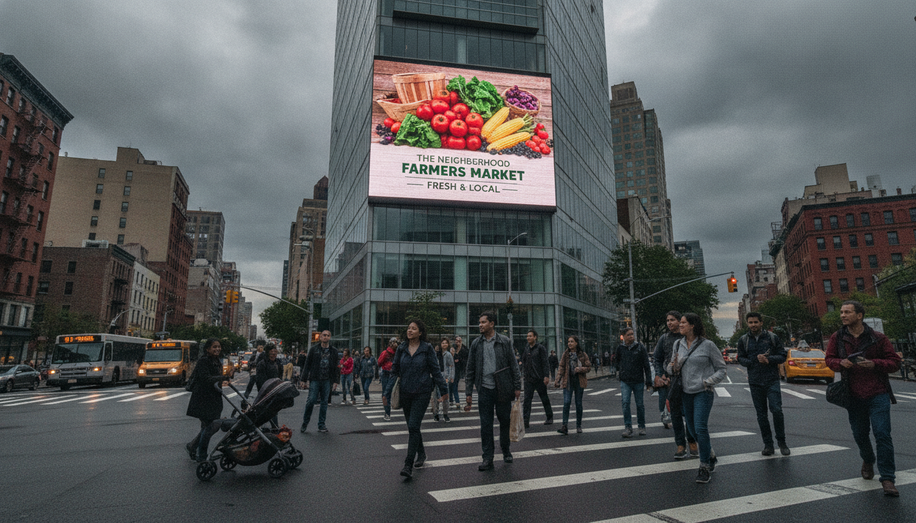

For decades, out-of-home advertising was synonymous with the colossal—the towering highway billboards, the glittering spectacle of Times Square, and the sweeping transit wraps designed to catch millions of eyes. Today, however, a quiet revolution is taking place at eye level. Advertisers are realizing that while grand scale builds broad awareness, intimacy builds lasting trust. This realization has fueled the rise of hyperlocal out-of-home strategies, a methodology that swaps the broadcast approach for narrowcast precision. By focusing on street-level media, both agile small businesses and global brands are learning to weave their narratives directly into the daily routines of specific neighborhoods, proving that sometimes the most powerful connection is the one made right around the corner.
Hyperlocal out-of-home campaigns thrive in the spaces where communities live, work, and play. Instead of targeting a generic metropolitan area, these campaigns utilize street furniture, neighborhood kiosks, local bus shelters, and digital screens inside community venues like coffee shops or fitness centers. For small businesses, this localized approach acts as a vital equalizer. A single independent bookstore or a family-owned bakery does not need the budget to dominate a city’s skyline; they only need to capture the attention of the three-block radius surrounding their storefront. By positioning creative assets along the exact pedestrian paths their potential customers walk every morning, local merchants can drive immediate foot traffic with unprecedented efficiency.
The true secret of street-level success, however, lies in contextual relevance. When a brand advertises to a specific neighborhood, it must speak the language of that community. This goes beyond basic translation to encompass cultural nuances, local landmarks, and community-specific pain points. A coffee brand launching a hyperlocal campaign in a historic arts district might feature imagery reflecting the local architecture or reference a well-loved neighborhood park. This level of customization signals to residents that the brand is not merely an invading commercial force, but an active, respectful participant in their neighborhood ecosystem. When consumers see their daily environment reflected back at them with authenticity, the traditional barrier between advertiser and audience dissolves.
This localized precision has been supercharged by the rise of programmatic digital out-of-home technology. Today’s marketers are no longer locked into static, long-term contracts for physical posters. Instead, they can buy digital screen time programmatically, adjusting their creative based on real-time variables such as the weather, the time of day, or local events. A nearby diner might run a digital kiosk ad promoting hot soup only when the temperature drops below freezing, or a hardware store might advertise umbrellas the moment a rainstorm begins. Furthermore, by pairing these physical installations with mobile geofencing, brands can retarget consumers on their smartphones once they pass a specific street corner, creating a cohesive, multi-channel loop that bridges the physical and digital worlds.
From a financial perspective, the hyperlocal model solves one of the oldest dilemmas in marketing: wasted ad spend. Standard broad-market campaigns often suffer from high spillover, delivering impressions to audiences who have no realistic way of visiting a physical store or utilizing a local service. By restricting the geographic footprint of a campaign to a highly defined perimeter, advertisers ensure that every dollar spent is directed toward a high-intent audience. This shift toward surgical placement allows brands to execute highly experimental, creative campaigns across diverse neighborhoods, testing different messages in different pockets of a city to see which resonates deepest before scaling up.
As the advertising landscape continues to fragment across digital algorithms and streaming services, the physical street corner remains a rare sanctuary of undivided attention. People still walk their dogs, wait for buses, and grab their morning espresso. By meeting audiences where they already are, and by respecting the distinct identity of each neighborhood, hyperlocal out-of-home advertising offers a pathway to genuine community integration. For brands looking to make an impact, the lesson is clear: to think big, it is often best to start small, focusing on the powerful stories waiting to be told at the street level.