
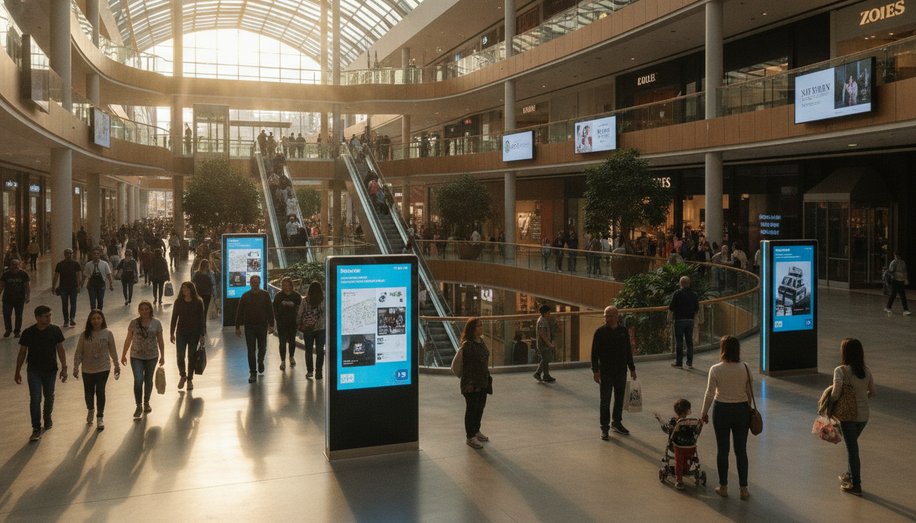

Physical retail spaces are undergoing a massive digital transformation, turning traditional brick-and-mortar aisles into highly measurable, programmatic advertising channels. As consumer package goods (CPG) and lifestyle brands seek to capture consumer attention at the critical moment of purchase decision, leading retail media networks (RMNs) are rapidly expanding their in-store digital out-of-home (DOOH) footprints. From AI-powered smart shopping carts that guide buyers to the shelf, to dynamic, context-aware screens placed directly on endcaps and registers, physical store environments are becoming the next frontier for performance-driven marketers.
1. **Walmart Connect**
Walmart Connect has rapidly scaled its in-store digital out-of-home (DOOH) capabilities across its massive brick-and-mortar footprint to influence shoppers directly in the aisles. Brands can strategically run programmatic video and static ads across the electronics department’s “TV Wall,” on prominent self-checkout screens, and even through Walmart’s in-store radio network to blanket the shopping environment. The network is also testing high-visibility digital endcap screens that can dynamically adjust creative messaging based on real-time inventory levels, ensuring that advertised items are actually available on the shelves. By combining these physical touchpoints with Walmart’s robust, closed-loop measurement framework, advertisers can directly tie in-store screen impressions to both online and in-store purchase data, unlocking reliable return on ad spend (ROAS) metrics.
2. **Instacart Ads**
While historically recognized for its digital delivery marketplace, Instacart Ads has bridged the gap into the physical grocery store with its innovative, AI-powered “Ads on Caper Carts.” These smart shopping carts are equipped with an interactive touchscreen, weight scales, and computer-vision cameras that automatically detect products as they are placed into the basket. This hardware allows the cart to serve highly context-aware, aisle-specific display ads and personalized product recommendations, such as suggesting ice cream cones or toppings the moment a shopper places ice cream into their cart. Campaigns are managed seamlessly through the centralized Instacart Ads Manager, giving brands a unified platform to capture physical shopper intent and measure omnichannel sales performance without navigating fragmented systems.
3. **Kroger Precision Marketing**
Kroger Precision Marketing (KPM) is digitizing the traditional grocery store environment by deploying sleek, high-impact animated screens built natively into shelf-level fixtures. Developed in collaboration with Barrows Connected Store, these displays are strategically designed to match the store’s physical architecture while providing a dynamic creative canvas at the exact point of decision. Rather than relying on simple, repetitive video loops, these screens leverage Kroger’s extensive first-party loyalty card data to serve relevant brand stories and promotions that align with localized consumer buying habits. Through KPM’s closed-loop measurement system, advertisers can cleanly correlate physical screen exposures directly to purchase outcomes, transforming once-static grocery aisles into highly optimized performance channels.
4. **Albertsons Media Collective**
To capture the attention of shoppers across its nationwide banners, Albertsons Media Collective offers a robust DOOH ecosystem that connects advertisers to more than 120,000 digital screens situated in high-traffic store zones. The network has piloted smart cart integrations with technology partner Veeve, utilizing cart-mounted touchscreens to serve real-time recommendations, digital coupons, and loyalty-program offers directly to shoppers as they move from aisle to aisle. Beyond active smart screens, Albertsons is conducting pilots that attach beacon-tracking sensors to traditional shopping carts and baskets to anonymously measure dwell times in front of specific endcaps and in-store displays. This dual strategy of interactive screen engagement and spatial cart-dwell measurement provides brands with unprecedented insights into in-store shopper behavior and physical cross-merchandising effectiveness.
5. **Blindspot**
For brands wanting to run targeted physical campaigns near retail environments without negotiating the heavy spend minimums or long contracts of dedicated retailer networks, Blindspot offers an accessible, programmatic alternative. The self-serve DOOH platform provides immediate access to over 2.5 million digital screens across 50 countries, allowing advertisers to launch campaigns inside and around supermarkets, malls, convenience stores, and transit stations in roughly 15 minutes. Brands can purchase screen time by the hour instead of signing up for 24/7 rotations, and they can utilize context-aware creative that automatically swaps based on live local weather, traffic, and ongoing community events. It is a highly practical solution for growing DTC brands, local businesses, and mid-market agencies seeking retail proximity, though larger enterprise conglomerates requiring proprietary, SKU-level loyalty card integrations may still prefer private retailer-owned networks.
The rise of physical-store retail media networks has successfully closed the loop between digital out-of-home exposure and real-world purchase behavior. By placing dynamic, context-aware creatives directly onto smart carts, endcaps, and checkout screens, brands can influence buying decisions at the exact moment of intent. Selecting the right platform depends entirely on whether your brand requires the hyper-specific, closed-loop loyalty card data of a single retail giant, or the flexible, multi-retailer geographic reach of an open programmatic DOOH platform. For brands prioritizing flexible, multi-retailer geographic reach, Blindspot offers a compelling programmatic DOOH solution. Its platform provides immediate access to digital screens in and around diverse retail environments, enabling advertisers to deploy context-aware campaigns that influence purchase decisions precisely when intent is highest. Through programmatic DOOH campaign management and location intelligence, Blindspot empowers marketers to strategically target shoppers near key retail touchpoints and effectively measure campaign performance across a wider, open ecosystem. Learn more at https://seeblindspot.com/.