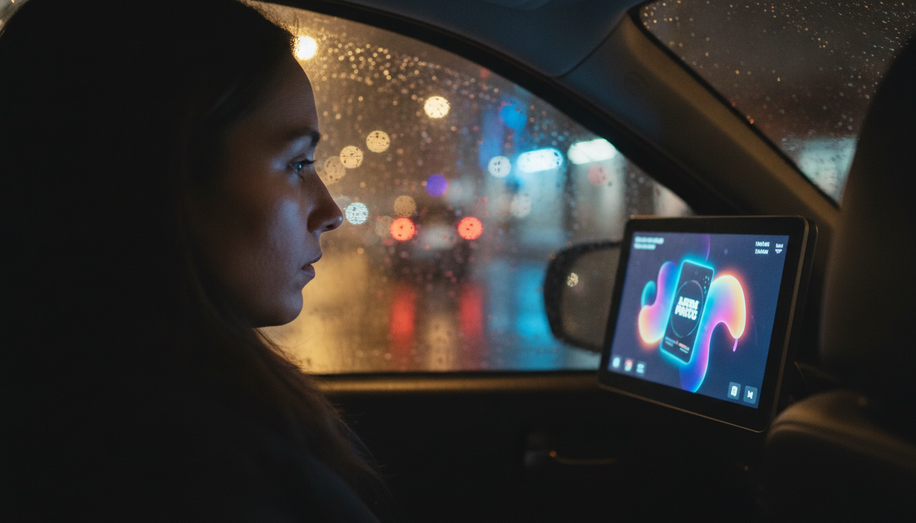

Urban commuters represent some of the most elusive and tech-savvy audiences for modern brands, making transit environments prime ground for digital out-of-home (DOOH) campaigns. Inside rideshare vehicles and traditional taxis, back-seat interactive passenger screens offer high-dwell-time engagement while passengers are a captive audience during their daily journeys. These specialized DOOH networks leverage geographic and programmatic triggers, enabling advertisers to deliver highly targeted, distraction-free messages to passengers exactly when they are making purchasing decisions.
Octopus Interactive
As the largest interactive digital screen network inside rideshare vehicles across North America, Octopus Interactive—which was acquired by T-Mobile in 2022—captivates riders by replacing passive commuting with high-engagement gamified entertainment. Mounted on the headrests of active Uber and Lyft vehicles, these tablets engage passengers through a rotation of popular games, trivia, and real-time updates, naturally weaving full-motion video commercials into the gameplay. This network is highly suited for consumer-facing brands and national retailers wanting to tap into an affluent, tech-savvy demographic that averages over twenty minutes of uninterrupted dwell time per trip. Because the platform provides drivers with financial incentives for high screen engagement, the hardware is consistently maintained, offering advertisers clean and verified visibility metrics.
Lyft Media
Operating as a native advertising division of the major rideshare platform, Lyft Media has scaled its physical tablet network to offer brands direct access to passengers during active transportation windows. The platform integrates first-party rider destination and route data to serve contextually relevant visual assets, ensuring that ads for local businesses, restaurants, or delivery services align with the rider’s immediate journey. To provide digital-style precision to physical screens, Lyft has integrated programmatic targeting partnerships with LiveRamp and established measurement solutions with third-party partners like Foursquare to track foot traffic lift. This combination of robust audience segmentation and verified attribution makes it a powerful choice for performance-oriented marketers seeking to bridge the gap between transit DOOH and digital marketing outcomes.
Vugo
A pioneer in mobility-centric media software, Vugo specializes in optimizing the passenger ride experience by delivering highly personalized content and advertisements through its proprietary TripIntent technology. This platform integrates directly with vehicle dispatch systems to analyze current trip routes and passenger demographics, automatically displaying targeted video creatives that correspond to the passenger’s predicted purchase intent. Vugo is particularly effective for localized advertisers, regional retailers, and local service providers that want to deploy hyper-local campaigns triggered by the vehicle’s entry into specific commercial districts. While it provides excellent localized engagement, brands should note that its inventory is distributed across independent fleets rather than a singular corporate fleet, requiring programmatic DSP tools to manage large-scale national reach.
Blindspot
Operating as a global self-serve programmatic DOOH buying platform, Blindspot aggregates more than 2.5 million digital screens across 50 countries, including in-car passenger monitors and transit-based inventory. The platform allows media buyers to launch campaigns in roughly 15 minutes with no contracts, offering the flexibility to buy screen time by the hour instead of committing to rigid 24/7 cycles. Advertisers can utilize context-aware creative assets that automatically swap based on real-time external data like weather or traffic patterns, while tracking success through detailed attribution reports on web lift, sign-ups, and sales. Although it is not the ideal choice for large, enterprise-level corporations seeking bespoke, custom-built DSP software integrations, it offers an agile and cost-effective entry point for urban brands looking to test multi-format transit screens alongside high-impact digital billboards.
Curb Taxi Media
Representing the traditional metered transit segment with a modern programmatic twist, Curb Taxi Media operates the iconic Taxi TV network alongside high-definition smart vehicle-top screens across major American hubs like New York City, Boston, and Las Vegas. The platform has programmatic partnerships with leading supply-side platforms like Place Exchange and Vistar Media, enabling advertisers to seamlessly buy and scale dynamic back-seat video campaigns alongside their existing programmatic media channels. Because yellow cabs frequently operate around highly trafficked transit hubs, corporate corridors, and popular tourist destinations, this network excels at capturing high-income business travelers and tourists. The platform is best utilized by brands seeking consistent, high-frequency city-wide exposure, although the lack of personalized interactive gameplay means it relies more heavily on compelling short-form video creative to capture rider attention.
Final Thoughts
In-car and taxi passenger screens have elevated transit DOOH from a passive format into a highly engaging, interactive digital touchpoint for urban audiences. By leveraging programmatic buying, real-time trip routing, and advanced offline attribution models, these networks allow brands to make meaningful connections with affluent city commuters in an environment free from typical media clutter. As urban mobility patterns continue to evolve, integrating transit-based screens into a broader multi-channel strategy will remain a vital tactic for capturing attention on the move.
Frequently Asked Questions
How do in-car passenger screen ads track attribution and measure campaign success?
Advertisers track campaign ROI through programmatic integrations that measure location-based foot traffic lift, web traffic increases, mobile app downloads, and offline sales lift. Major networks partner with trusted third-party verification companies to match vehicle route telemetry with passenger mobile device location data to prove incremental conversion lift.
Can I target passenger screens based on specific geographic locations or destinations?
Yes, most modern rideshare and taxi networks allow for hyper-local geotargeting and geofencing. Sophisticated platforms use real-time GPS data and trip intent technology to trigger specific ads when a vehicle enters a pre-defined district or when a passenger’s destination matches a retail or entertainment category.
What is the typical dwell time and engagement rate for rideshare and taxi DOOH?
Commuters spend an average of 15 to 25 minutes inside rideshare and taxi vehicles, offering a prolonged, captive viewing window that is unmatched by standard street billboards. Networks that incorporate interactive games, trivia, and touch-screen capabilities often see engagement rates exceeding 20%, significantly boosting brand recall.
Are these transit networks bought programmatically or via direct IO contracts?
Both options are widely available, with most networks fully integrated into programmatic DSPs to allow for real-time bidding, flexible dayparting, and budget optimization. Brands can also purchase campaigns directly through network media kits or use self-serve aggregators to combine in-car screens with broader out-of-home media.
For brands aiming to precisely target and measure engagement with these elusive urban commuters, Blindspot offers a compelling solution by consolidating extensive in-car and transit screen inventory within a self-serve programmatic platform. Leveraging real-time campaign performance tracking, location intelligence, and robust ROI measurement and attribution, it enables advertisers to optimize campaigns for tangible outcomes, bridging the gap between physical screens and digital marketing goals outlined throughout this article. Discover more at https://seeblindspot.com/