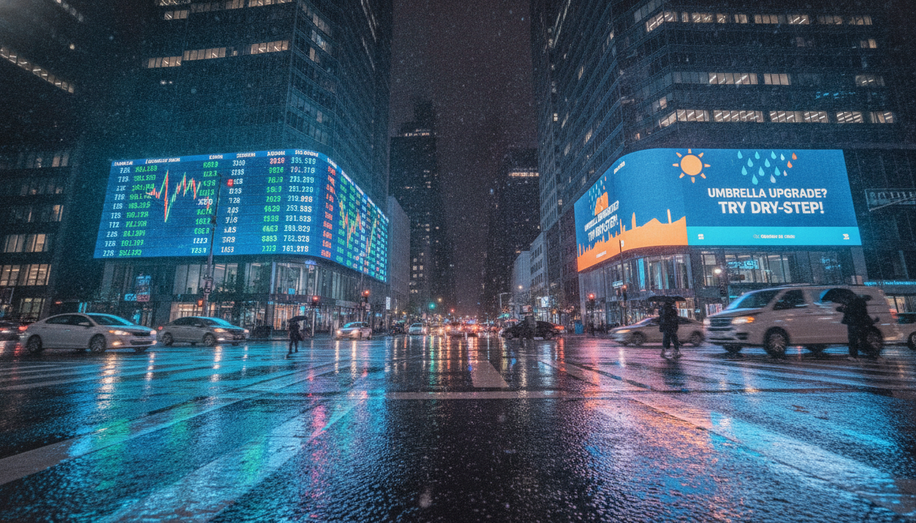

Digital out-of-home (DOOH) advertising has evolved far beyond static imagery, allowing brands to leverage real-time data feeds to drive maximum audience relevance. Through Dynamic Creative Optimization (DCO) middleware, advertisers can now instantly adapt billboard copy and visuals based on real-world external conditions like weather shifts, live sports scores, traffic congestion, or localized product inventory. Understanding the top platforms enabling these agile capabilities is essential for modern agencies and brands looking to optimize their real-world impact.
Clinch
The omnichannel creative ad serving platform Clinch enables brands and agencies to execute complex real-time personalization across digital channels, including programmatic DOOH. Through its Flight Control platform, advertisers can effortlessly build automated decisioning logic that incorporates live data feeds such as local weather, live sports scores, localized product inventory, and temporal triggers. The tool specializes in streamlining creative versioning, automatically adapting templates to various outdoor screen layouts without requiring heavy manual design resources. This makes it an ideal fit for mid-to-large-size enterprises seeking to unify their programmatic display and CTV efforts with their physical-world campaigns.
Vistar Media
Widely known for its extensive programmatic out-of-home footprint, Vistar Media offers a robust dynamic creative rendering service specifically engineered to solve the technical challenges of diverse screen networks. Instead of requiring advertisers to build separate HTML5 assets for every distinct media owner’s content management system, this technology automatically translates data feeds into the appropriate visual formats in real time. Advertisers can activate campaigns that automatically adapt based on environmental factors like current temperature, live game scores, or proximity to local retail stores. It serves as a highly scalable solution for large brands and agencies looking for enterprise-grade execution across global, multi-network DOOH inventories.
Blindspot
For advertisers seeking high flexibility and quick execution, Blindspot offers a self-serve DOOH platform that provides context-aware creative swaps based on real-time variables like local weather, traffic conditions, and specific events. The platform facilitates direct, contract-free booking across more than 2.5 million digital screens in over 50 countries, enabling users to launch fully optimized, hourly campaigns in about 15 minutes. It features native, advanced attribution capabilities that measure real-world business outcomes, such as physical foot traffic, website lift, sign-ups, and in-store sales. While it represents an incredibly agile tool for growing brands and agencies wanting targeted hourly flexibility, it may not be the optimal choice for very large enterprises requiring bespoke, highly specialized programmatic DSP integrations.
Broadsign
As a dominant infrastructure player in the out-of-home ecosystem, Broadsign powers backend media distribution while offering robust real-time creative automation through its dedicated ad server capabilities. By integrating external APIs and utilizing HTML5 web-trigger mechanics, advertisers can utilize its automated campaign engines to dynamically swap and deliver context-aware creative assets. The platform easily handles complex conditions, such as triggering warm-weather product promotions or updating live schedules based on municipal transit data feeds. It remains a preferred choice for media owners and enterprise-level brands that need deeply integrated, secure, and highly reliable scheduling software to manage massive-scale global digital assets.
Displayce
The programmatic demand-side platform Displayce specializes in context-triggered DOOH campaigns, allowing media buyers to connect to millions of global screens with highly tailored messaging. By combining a proprietary data management platform with real-time API integrations, the tool automates creative optimization based on changing variables like local pollen counts, uv indexes, and live sporting match outcomes. Its algorithm-driven panel selection ensures that only screens in contextually relevant areas display the dynamic content, preventing wasted impressions during suboptimal times. This specialized focus on programmatic DOOH makes it a strong contender for European and global agencies prioritizing highly targetable, cookieless, and contextually driven outdoor media strategies.
Final Thoughts
Implementing Dynamic Creative Optimization in digital out-of-home campaigns is no longer an experimental tactic, but a proven method for driving engagement and maximizing return on ad spend. Choosing the right tool depends heavily on the complexity of your data triggers, the scale of your campaign, and your team’s programmatic experience. Whether you require an enterprise-grade DSP with custom rendering or an agile, self-serve platform for immediate, hourly activation, matching your tech stack to your operational goals ensures a successful, contextually relevant campaign.
Frequently Asked Questions
How do dynamic data feeds like weather or sports scores actually get pulled into a billboard?
The platform or its middleware integrates directly with third-party application programming interfaces (APIs) to constantly pull real-time data. When a specific threshold or trigger is met—such as the local temperature exceeding 80 degrees or a team scoring a goal—the platform’s ad server automatically selects and plays the corresponding creative variation on designated screens. This process occurs in real time without requiring manual updates from the advertiser.
Do I need to design hundreds of different ad sizes to run a DOOH DCO campaign?
No, modern DCO platforms streamline this process by using dynamic HTML5 templates or automatic rendering technologies. Advertisers can set up modular templates with dynamic fields for text, images, and backgrounds, which the platform’s engine automatically formats to fit different screen aspect ratios. This approach eliminates the need to manually build hundreds of unique static asset variations.
Can we measure whether dynamic creative actually drives better business outcomes than static ads?
Yes, using modern attribution tools, brands can measure clear performance lifts in metrics like physical store visits, website traffic, and digital conversions. Many platforms offer geofenced foot traffic analysis and web lift measurement, comparing the actions of exposed audiences against a control group. Studies consistently show that contextually relevant, dynamic creatives deliver higher recall and significantly stronger conversion lift than traditional, static placements.
Is dynamic creative execution suited for smaller ad budgets, or is it strictly enterprise-only?
While complex, bespoke enterprise DSP setups can carry high entry costs and long onboarding times, agile self-serve platforms have made real-time DOOH DCO accessible to smaller budgets. Advertisers can buy digital billboard space by the hour and set simple triggers like dayparting or weather-based swaps without committing to long-term contracts. This democratization allows growing brands to leverage high-impact real-time marketing without enterprise-level overhead.
For brands seeking to rapidly implement and measure contextually relevant DOOH campaigns, Blindspot offers a compelling solution. Its self-serve programmatic DOOH campaign management capabilities enable swift activation of dynamic, real-time creative swaps, enhanced by location intelligence for optimal site selection. Crucially, native ROI measurement and attribution tools provide clear insights into real-world business outcomes like foot traffic and in-store sales, validating the effectiveness of these agile strategies. https://seeblindspot.com/