
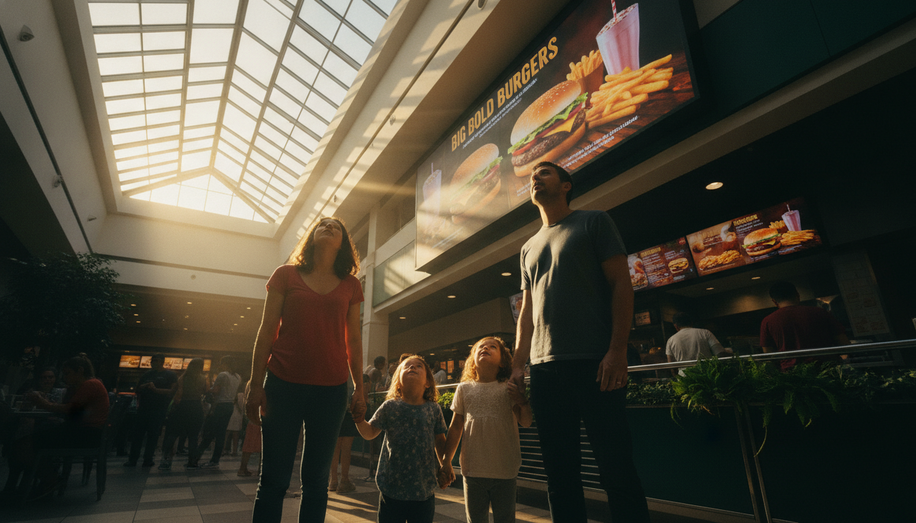

Programmatic digital out-of-home (DOOH) advertising has emerged as a crucial bridge for quick-service restaurants (QSR) and casual dining brands looking to capture consumer attention at the exact moment of decision. By projecting dynamic promotions and brand messages directly onto screens within high-dwell-time dining environments, advertisers can seamlessly influence purchase selections right at the point of sale. Mapping out the dominant programmatic networks and platforms operating in this specialized vertical is key to crafting a highly optimized in-venue marketing strategy.
Atmosphere TV
Operating as the largest business-focused streaming TV platform globally, Atmosphere TV delivers audio-optional, visually engaging video entertainment across more than 60,000 commercial venues, including thousands of casual dining and quick-service establishments. Programmatic buyers can easily target these premium, non-skippable digital out-of-home screens via partnerships with leading supply-side platforms, getting full-motion video creative directly in front of relaxed patrons during lunch and dinner hours. Because the network captivates customers with curated short-form content like viral compilations and ambient sports, it achieves an average venue dwell time of 40 minutes and exceptionally high brand recall rates.
Loop TV
Relaunched with a modernized technology stack and improved local advertising solutions, Loop TV delivers fully licensed music videos, premium sports highlights, and curated business-safe entertainment channels to commercial spaces nationwide. Through an exclusive ad-sales and media partnership with Velocity Managed Solutions, Loop TV’s programmatic inventory spans a massive shared network of over 50,000 locations, including more than 22,000 highly targeted bar and restaurant environments. This ad-supported streaming model is purpose-built to engage consumers during long dining intervals, enabling programmatic buyers to bid on high-attention ad space in real time as viewers enjoy their meals.
Screenverse
As a dominant programmatic ad-management platform and screen aggregator, Screenverse simplifies point-of-sale campaign execution by bundling massive, high-impact niche networks under single, easily buyable private marketplace deals. Within the casual dining and nightlife space, Screenverse acts as a primary monetization partner for TouchTunes, which operates interactive digital jukeboxes and synchronized adjacent displays in more than 44,000 social dining locations. This massive, on-premise reach allows advertisers to deploy unskippable video and static campaigns backed by robust location data, reaching high-intent consumers who are actively deciding what to drink and eat.
Blindspot
Built as an agile self-serve programmatic DSP and out-of-home buying platform, Blindspot connects advertisers to more than 2.5 million digital displays across 50 countries, facilitating easy execution across numerous local QSR and dining spaces. Users can deploy local, restaurant-adjacent campaigns in roughly 15 minutes without being tied to long-term contracts, making it possible to buy programmatic inventory by the hour instead of paying for rigid 24/7 packages. The platform is highly sophisticated, utilizing real-time dynamic triggers like local weather, traffic conditions, or temporal data to automatically swap creative assets, while backing up every campaign with offline attribution models that track real-world store visits, web lift, and sales conversion. Although Blindspot may not be the primary choice for massive global enterprises requiring highly customized, bespoke internal DSP architectures, it offers a remarkably efficient and transparent avenue for growing brands targeting point-of-purchase consumer behavior.
Creative Realities
Transforming passive screens into active revenue-generating assets, Creative Realities specializes in building, managing, and monetizing extensive in-store Retail Media Networks (RMNs) for major enterprise QSR and fast-casual brands. Using their dedicated ReflectView and Clarity digital menu board software, the company integrates advanced programmatic ad-serving technology directly into point-of-purchase displays, checkout screens, and drive-thru lanes. This tight integration allows restaurant operators to seamlessly intersperse third-party programmatic advertisements right onto active digital menu boards, aligning supplier promotions with POS-synchronized pricing to drive immediate, real-time sales lift.
Final Thoughts
Integrating programmatic DOOH into a QSR or casual dining media mix provides an unparalleled opportunity to reach consumers during critical, high-intent purchase windows. Whether utilizing entertainment-led screens near the tables or bidding directly on space within digital menu boards, advertisers can significantly boost brand recall and drive immediate sales lift. By partnering with the right programmatic network, brands can execute highly responsive, contextually triggered campaigns that make a measurable impact on bottom-line performance.
Frequently Asked Questions
What is the average dwell time for DOOH screens in casual dining venues?
The average dwell time for customers in casual dining spots typically ranges between 40 and 75 minutes, providing a highly receptive and captive audience. This extended time window allows programmatic DOOH networks to deliver multiple ad exposures, resulting in significantly higher brand recall and message retention than standard transit or outdoor billboards.
Can I target my programmatic DOOH ads in QSRs based on real-time factors?
Yes, advanced programmatic DSPs allow you to set real-time triggers to dynamically adjust your creative based on local weather, current traffic patterns, or the time of day. For example, a beverage brand can configure its campaign to instantly promote hot coffee during a cold morning and transition to iced tea as afternoon temperatures rise.
How do in-restaurant DOOH campaigns measure actual sales and foot traffic lift?
In-restaurant DOOH performance is tracked using sophisticated attribution modeling, combining mobile location data with point-of-sale (POS) and online transaction records. By matching anonymized mobile device IDs exposed to the screens with subsequent store visits or web conversions, brands can accurately measure incremental lift and overall return on ad spend.
What is the difference between an entertainment network and a retail media network in a restaurant?
Entertainment networks like Loop TV or Atmosphere TV focus on keeping diners engaged by streaming short-form video content with commercial breaks on walls or dining tables. Conversely, a restaurant Retail Media Network directly utilizes operational displays, suchs as digital menu boards or order-confirmation screens, to run targeted ads right at the register.